





Najbolj priljubljene igre


The Best Children’s Games – Fun that Develops the Brain
If you’re not sure which game to choose, take a look at our selection of the best board games for different ages, numbers of players and occasions.
The World of Children’s Board Games: Fun and Learning in One Place
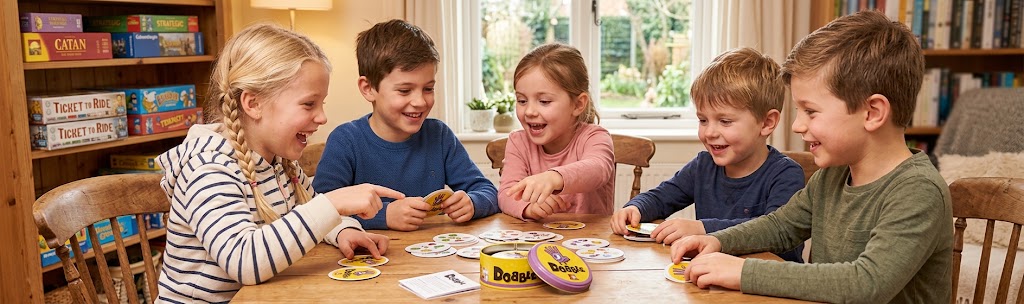
Children’s board games are more than just a way to pass the time. They are a valuable tool for promoting children’s holistic development, strengthening family bonds and teaching important life lessons through play. Unlike digital screens, board games offer a tangible, interactive experience in which children learn observation, patience and how to cooperate with others.
The children’s games category covers a wide range of titles – from early toys that stimulate sensory perception to more complex mental challenges for younger schoolchildren. The main aim of these games is to offer children a challenge tailored to their stage of development, whilst ensuring the experience remains relaxed, playful and motivating.
How to choose a suitable children’s board game?
When choosing the right game for children, it is essential to consider a few key factors, as rushing into a game that is too difficult or too simple can lead to boredom or frustration.
Age and stage of development
The age recommendation on the packaging is an excellent starting point.
Toddlers (2–3 years): At this age, game pieces made from natural materials (wood, thick cardboard) are best, as they are safe and easy to grip. The rules should be kept to a minimum, and the game is often based on recognising colours or shapes.
Pre-schoolers (4–5 years): Players in this group already understand the concept of sequence and simple rules. Memory games, dice games and simple cooperative games are ideal.
Young schoolchildren (6–8 years): Children are ready for games involving more tactics, planning, simple maths and quick reactions.
Game types: Cooperative or competitive games
For younger children or those who are just getting to know board games, cooperative games are highly recommended. In these games, all players work together against the game itself. Cooperation removes the pressure of individual defeat and teaches teams to solve problems together. Competitive games, on the other hand, help to develop a healthy competitive spirit and the ability to accept both victory and defeat.
Game duration
Children’s attention spans are limited. When choosing a game, pay attention to the estimated playing time: for younger children, the game should be short (up to 15 minutes), as this is the only way they will remain focused from start to finish.
The benefits of regular board game play for children
Regularly playing board games has a positive impact on several areas of a child’s development:
Cognitive development: Strengthening memory, recognising patterns, early counting and strategic thinking.
Fine motor skills and coordination: Picking up pieces, rolling dice, placing cards precisely and assembling components.
Social and emotional skills: Waiting for one’s turn, respecting fellow players, communicating and managing emotions in the face of failure.
If you’re looking for games that are equally fun for both children and adults and allow the whole family to play on an equal footing, do take a look at our range in the family board games category.
Frequently asked questions
From what age are children’s board games suitable?
The first children’s board games are suitable for little ones from the age of 3 or 4 onwards. For the very youngest, there are games with simple rules, large wooden or cardboard pieces, and a focus on recognising colours and shapes or on cooperative play.
What is the difference between competitive and cooperative children’s games?
In competitive games, each player plays for themselves and tries to win, whilst in cooperative games, all the children (or children and parents) play as a team against the game mechanism itself. Co-operative games are excellent for younger children, as they encourage teamwork and prevent frustration at losing.
How do you choose the right board game for a child’s age?
When choosing a toy, always check the recommended age on the packaging, which takes into account the complexity of the rules and the size of the components. For the youngest children (2–4 years), choose simple games with visual elements; for pre-schoolers (4–6 years), games that develop memory and fine motor skills; and for schoolchildren (6+ years), more challenging strategic or logic games.
What skills do children develop when playing board games?
Children’s board games help to develop logical thinking, fine motor skills, concentration, spatial awareness and memory. As well as cognitive skills, these games teach children important social skills, such as taking turns, accepting defeat, sharing and communicating.
How long does a children’s party game usually last?
The duration of the game is tailored to the child’s ability to maintain their attention. For very young children, games usually last between 10 and 15 minutes, whilst for older pre-schoolers and primary school pupils, they last between 20 and 45 minutes.