



Description
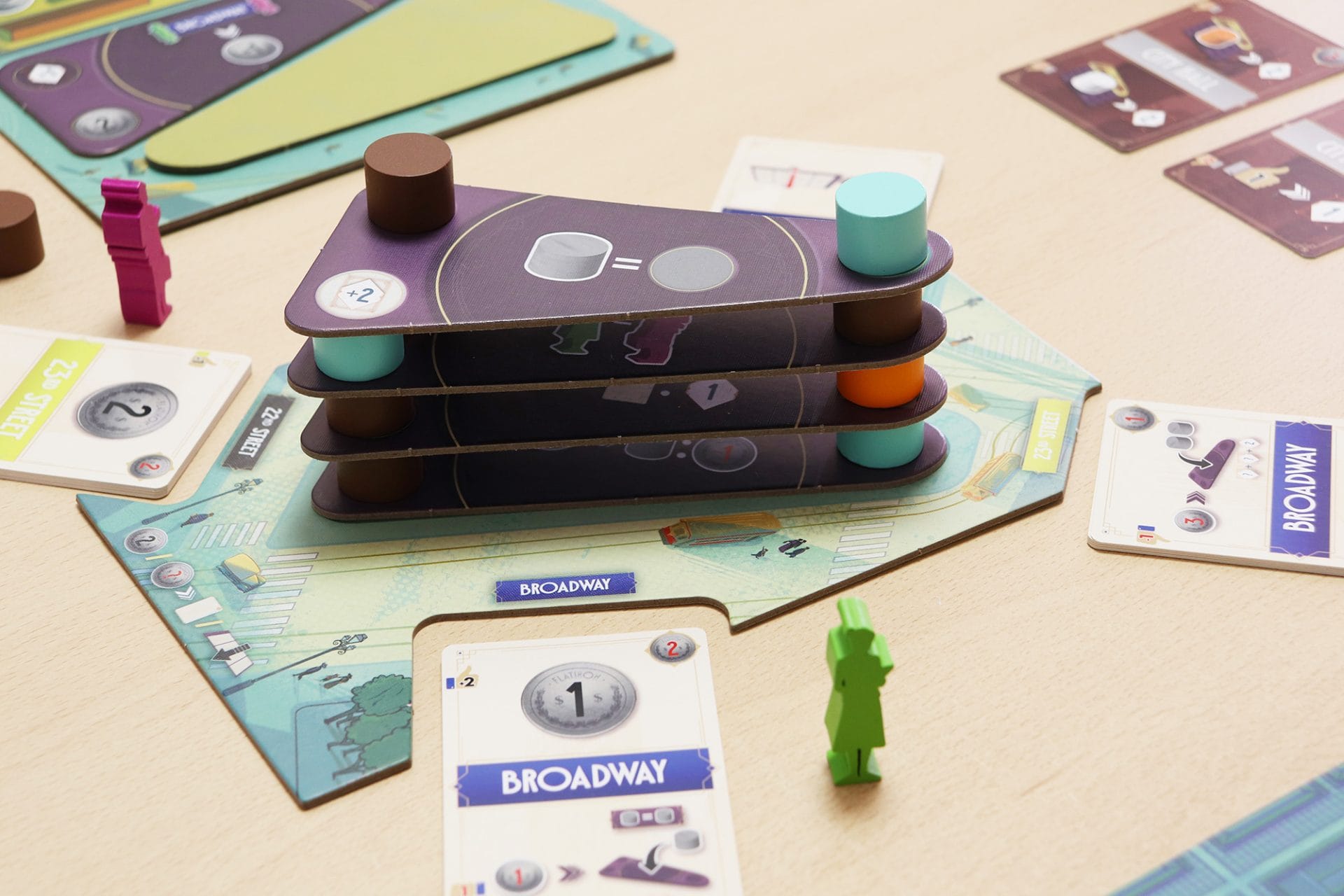
In 1902 the Flatiron rose in Manhattan, a triangular skyscraper that became one of the images of New York. In Flatiron you build it together with your opponent, but each for your own company. You buy pillars, place them on the floors and build new floors until the roof is in place. Whoever collects more victory points along the way wins.
How to play Flatiron
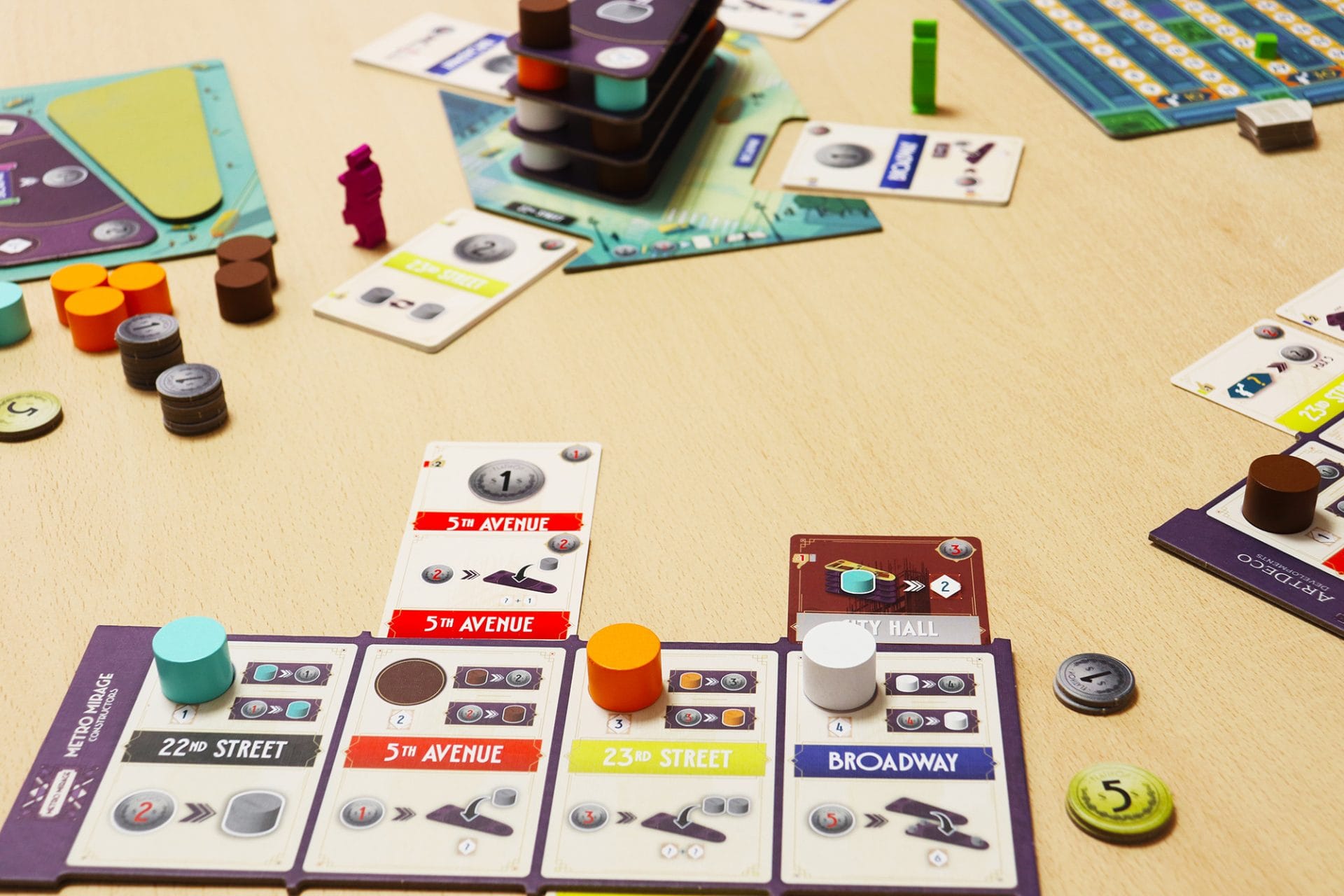
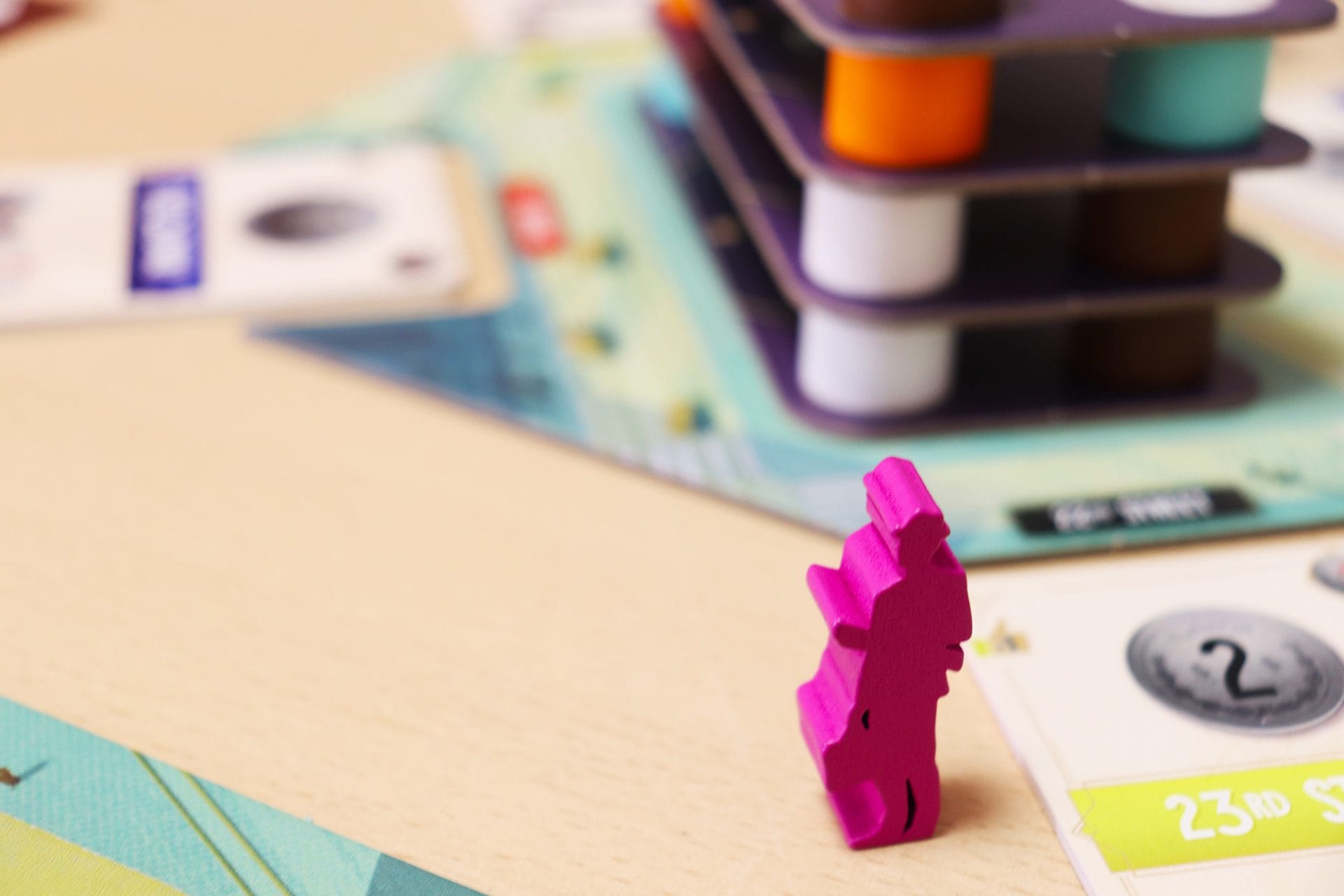
On your turn you move your architect to one of the four streets around the building or to City Hall. There you do one thing: buy a card, trigger that location's actions or take 2 dollars. You may not go to the location where your opponent's architect is standing.
You place the cards you buy on your own board, in the column of their street – at the top or at the bottom, so you only see one of a card's two actions. When you visit a street, you trigger all the visible actions in its column. You use them to buy pillars and build. The game ends when someone places the roof. At the end you also score points for your company's reputation and for City Hall decrees.
Why you'll love it
- Every card you buy is a decision: whether to place it at the top or the bottom, and which of its two actions you will hide for good.
- Your architect blocks a location for your opponent, so it matters not only what you do but also where you go.
- Each floor has its own effect and bonuses for pillar spaces, so the game changes a little with every new floor.
- Newspaper tokens give you an extra action just when you need it most.
Who is Flatiron for
The game is for 1 or 2 players aged 12 and up, and a game lasts about 45 minutes. It is medium-weight and shines most with two. On your own you can take on Daniel Burnham, the building's architect, who is run by a deck of special cards. It suits couples and players who enjoy thoughtful planning. If you are looking for a game for a larger group, this is not the right choice. There is no text in the game that you would have to read, so language is not a barrier.
What's in the box
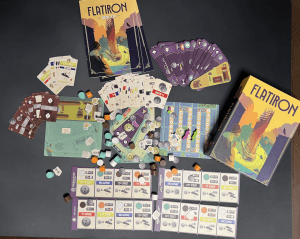
- Manhattan board, City Hall board and scoring board
- 4 double-sided player boards
- 32 street cards and 10 City Hall decree cards
- 15 floors and the roof
- 28 pillars in four colours
- 14 newspaper tokens and 4 reputation tokens
- 26 coins
- 2 architects, 2 score markers and the paperboy
- 9 Daniel Burnham cards for the solo game