
The first few bars play and someone at the table is already singing the chorus. But when did this song come out? Before the one from the eighties you already have in front of you, or after it? Hitster is a music card game in which a phone plays a song and you place it among the hits you have already collected. You don't need to know the exact year – a good feel for the decades and a little courage are enough.
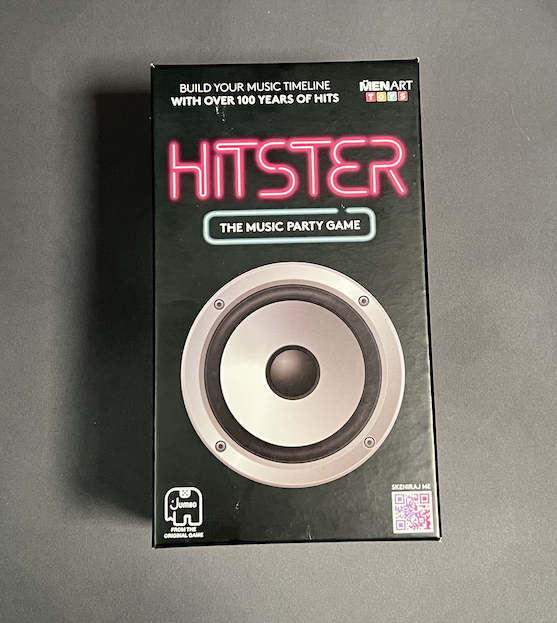
The game is for 2 to 10 players, playing individually or in teams, and takes about 30 minutes. The publisher recommends it for ages 16 and up.
What is Hitster?
Every card in Hitster is one song. One side has a QR code, the other the artist, title and year of release. You scan the code with the free Hitster app, the song plays, and you place it on your timeline – a row of cards ordered from the oldest to the newest song. The first to correctly place ten songs wins.
The charm of the game is that nobody quizzes you on dry facts. All you have to judge is whether a song is older or newer than the ones you already have. At the start this is easy, since you have just one card in front of you. But as the cards pile up, the gaps between the years keep shrinking and every new song is a bigger challenge. So even the player in the lead can't easily pull away.
Besides international hits, the Slovenian edition also includes Slovenian and Croatian songs, so local favorites turn up among the cards too. The game was designed by Marcus Carleson and released in 2022 by Jumbo. In 2023 it was recommended by the Spiel des Jahres jury, and it has also won several party game awards, including the Lys Grand Public 2023 and the Guldbrikken 2024.
What's in the Hitster box
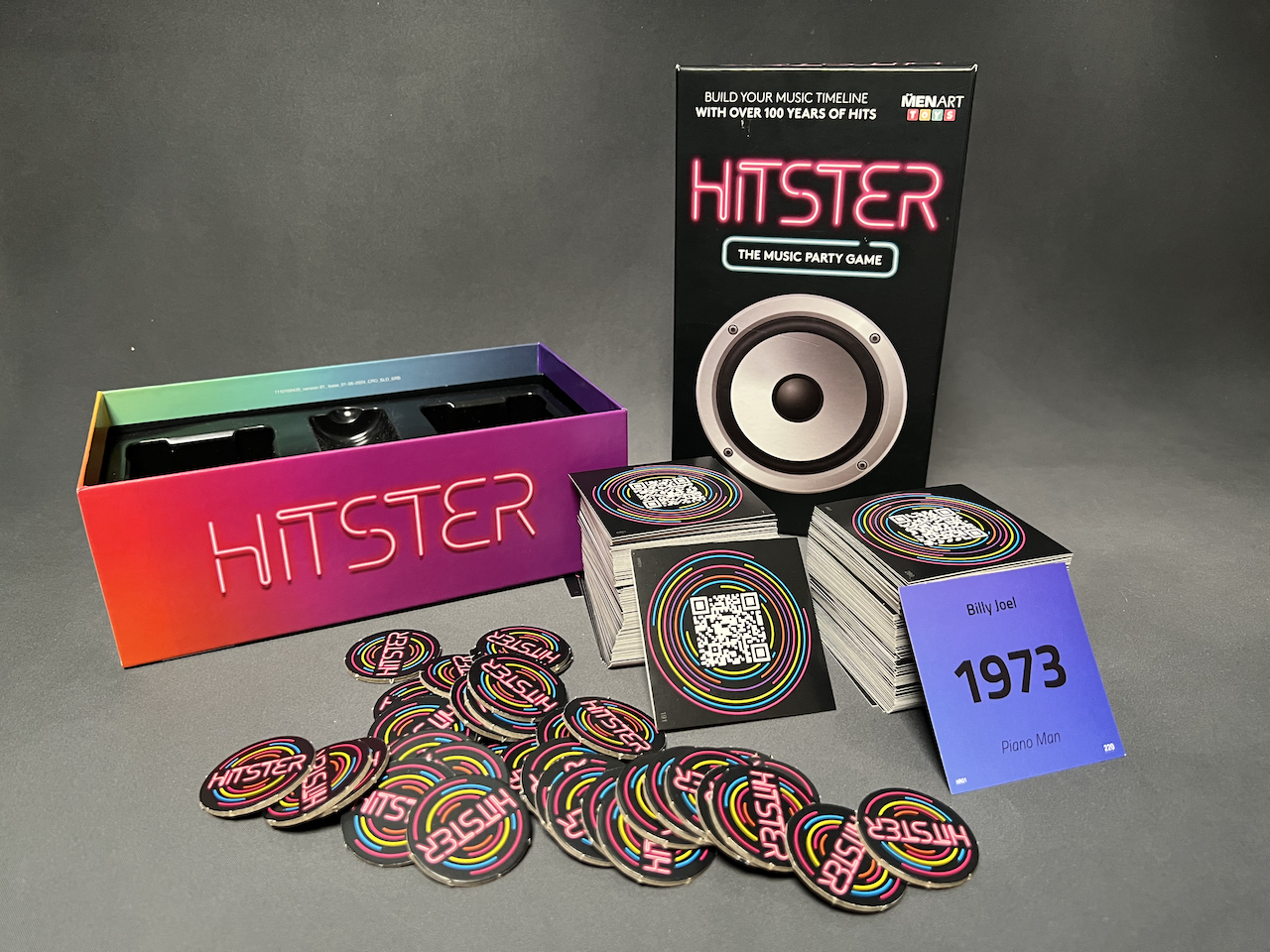
The box is small and the game is set up in a minute. It contains:
- 308 music cards with QR codes,
- 37 Hitster tokens,
- the rulebook.
To play, you also need a phone with an internet connection and the free Hitster app, which you use to scan the cards. The music is played by the Spotify streaming service, which you connect to the app. Without a paid account you only hear a short clip of the song; with a paid one you can listen to the whole song from the beginning.
Hitster rules
Hitster's rules can be explained in a few minutes. Below we summarize the publisher's official rules for the basic game.
Setup
First agree whether you are playing individually or in teams. Put the stack of music cards on the table with the QR codes facing up. Each player or team gets one card and places it in front of them with the year facing up – this is the start of your timeline. If you play with tokens, everyone also gets two.
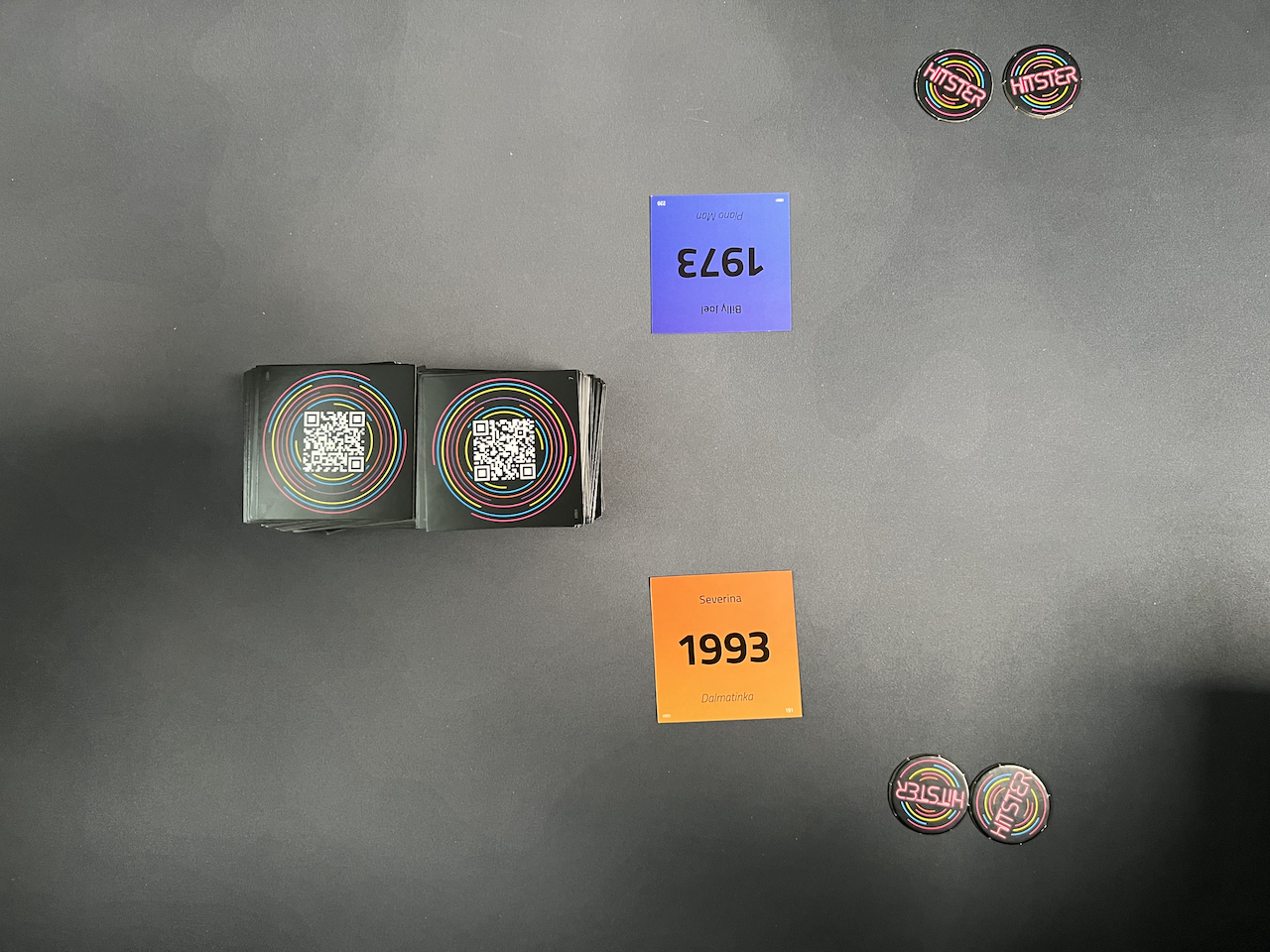
Then you choose a DJ. The DJ opens the Hitster app and scans the cards, but can also keep playing like everyone else. Whether the DJ stays the same all game or you take turns is up to you. The rules advise that the DJ not wear a smartwatch during the game, since it can show information about the song.
Who goes first
Everyone draws a random card from the stack. The player with the oldest song goes first, then play continues clockwise. Return these cards to the stack and the game can begin.
A turn
- The DJ scans the top card of the stack with the app and the song plays.
- On your turn, you take the card and place it year side down on your timeline: before the cards you already have, between them or after them.
- You flip the card. If the year is in the right place, you keep it; otherwise you discard it.
If the new song has the same year as a card you already have, you may place it right before or right after that card. Then it is the next player's turn.
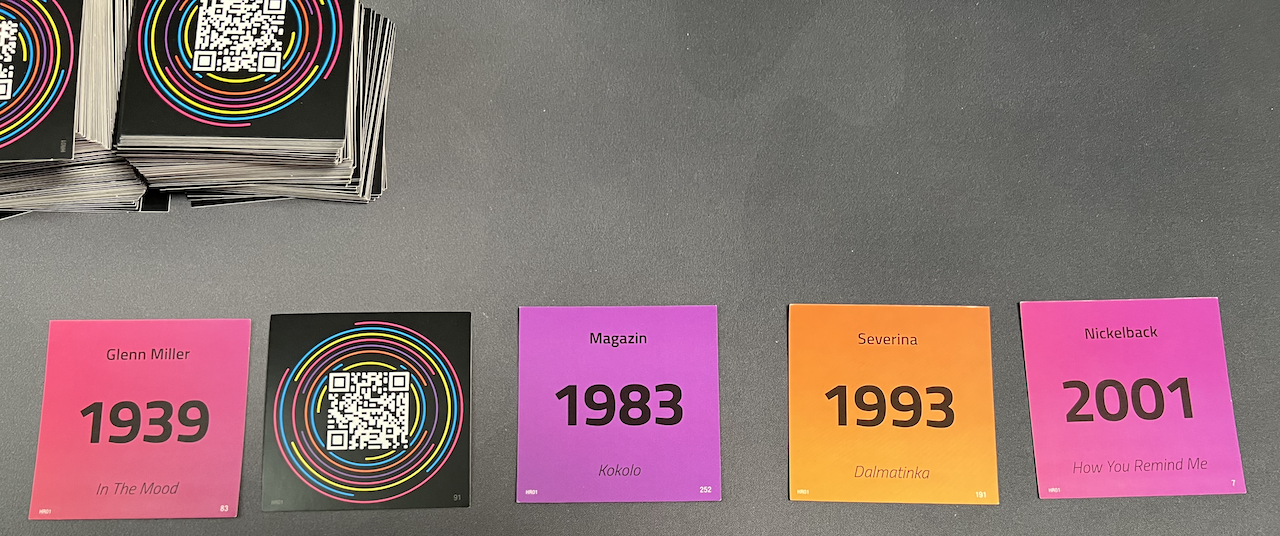
Hitster tokens
Tokens are optional, but they add tension to the game. Each player or team starts with two and may never have more than five.
- Skip: on your turn, if you don't know the song, you skip it with one token and the DJ scans a new card.
- HITSTER call: when it's another player's turn and you think they placed the card wrong, you call out “HITSTER!” and put your token on the spot in their timeline where you think the song belongs. If you're right, you take the card and place it on your own timeline.
- Buying a card: at any time, even when it's not your turn, you trade three tokens for a card from the stack and place it on your timeline without guessing.
- New token: on your turn, if you correctly name the artist and title of the song, you get a token.
Spent tokens go back into the box. If several players call HITSTER, the fastest one places their token first, and the others may choose a different spot on the same timeline.
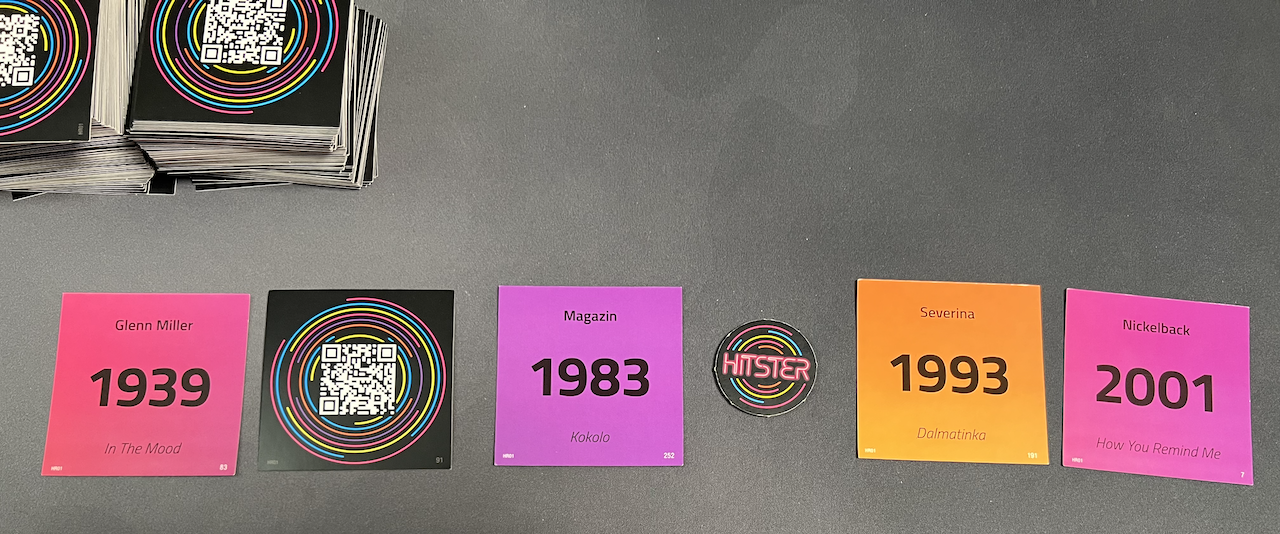
End of the game and the winner
The first player or team to correctly place ten cards on their timeline wins. There are no points to count. If you want a harder or longer game, the rules suggest using fewer tokens or raising the number of cards needed to win.
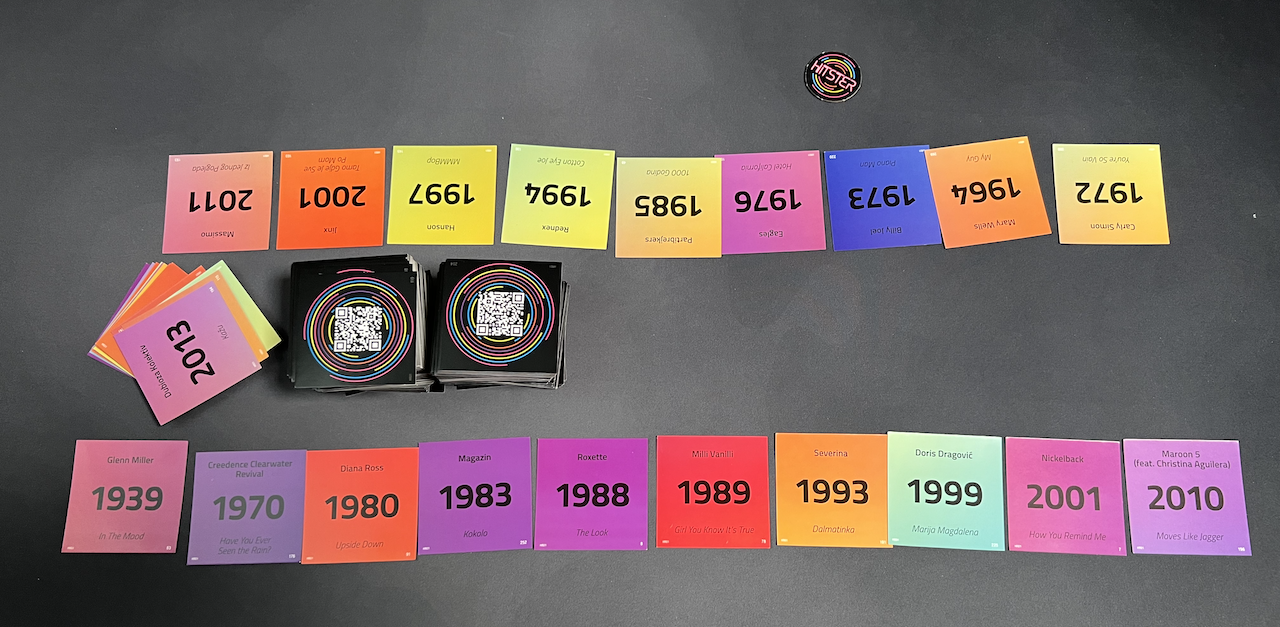
Pro, Expert and co-op modes
Each player or team can choose their own difficulty. That way a music buff can play a harder mode while the others play the basic one.
- Pro: you only get or take a card if you place it correctly and also name the artist and title. You start with five tokens and can't earn new ones.
- Expert: besides the spot on the timeline, you must name the artist, the title and the exact year. You start with three tokens and can't earn new ones.
- Co-op mode: you all play as one team, with five tokens and one card. You lose a token for every mistake and win if you correctly place ten cards before you run out of tokens.
Common mistakes
- You get the token for the artist and title even if you place the card in the wrong spot.
- If you call HITSTER and you're wrong, you lose the token and the active player keeps the card – even if you placed your token on a spot where the card would also have been correct because of a matching year.
- Two tokens can't be on the same spot of another player's timeline.
- You can never hold more than five tokens at once.
Hitster tips and strategies
Hitster is above all about fun, but a few decisions still affect who reaches the tenth card first. Most of them have to do with tokens.
Tips for beginners
- Always try to name the artist and title. You get a token even if you place the card wrong, so you have nothing to lose.
- Don't skip every song you don't know. A skip gets you out of a hard song, but then you don't have that token for a HITSTER call or for buying a card. At the start, when you have only one or two cards on your timeline, guessing is still fairly safe.
- Call HITSTER when you're sure. If you're right, you get the card and the other player goes without it. If you're wrong, the token is lost.
Tips for experienced players
- Save tokens for the end. Three tokens for a card without guessing is a steep price, but once your timeline is long and the gaps between years are small, a sure card is worth more than a risky guess. You can buy at any time, even when you are just one card away from winning.
- Watch the upper limit. Once you have five tokens, you don't get a new one. At that point it's smart to spend one on a skip or a call, so that your next correctly named title doesn't go to waste.
- Watch the other players' timelines. The longer another player's timeline, the narrower the gaps between their cards and the bigger the chance they get it wrong. That's when a HITSTER call pays off most.
- Choose the right mode. Pro and Expert give you more tokens at the start, but you can't earn more, and you need to know more for every card. If you know your songs well, it's a fair challenge and an advantage for the other players at the same time.
Who is Hitster for?
Officially, Hitster is for 2 to 10 players aged 16 and up. There is little reading – on a card you only read the artist, title and year – and no math, you just compare years. Younger players will easily understand the rules given how simple they are, but they will recognize fewer songs, so playing in teams works well in a mixed group.
By its rules it is a light game: you decide where to place a card and when to spend a token. There's quite a bit of luck, since you don't know which song will play, but tokens soften it somewhat – with a skip or by buying a card. There's hardly any waiting, because everyone listens to the song and anyone can call HITSTER, even when it's not their turn. Players interact mainly through tokens, when you take a card from another player; otherwise everyone builds their own timeline. Nobody gets eliminated.
With just two of you, you play by the same rules, only with fewer HITSTER calls. Players like it best with four to six, when there are enough people at the table who know music from different decades. Hitster is one of the party games for parties, celebrations and family gatherings.
In our experience, Hitster is great fun. The music often takes you back to the times when you listened to a certain song, and it quickly becomes clear that some people at the table know an awful lot about music. It also often happens that you know the song, title and artist included, and still miss the year.
Games similar to Hitster
Alias Party is also a game for larger groups and teams, except that instead of guessing years you describe words to your teammates in funny ways.
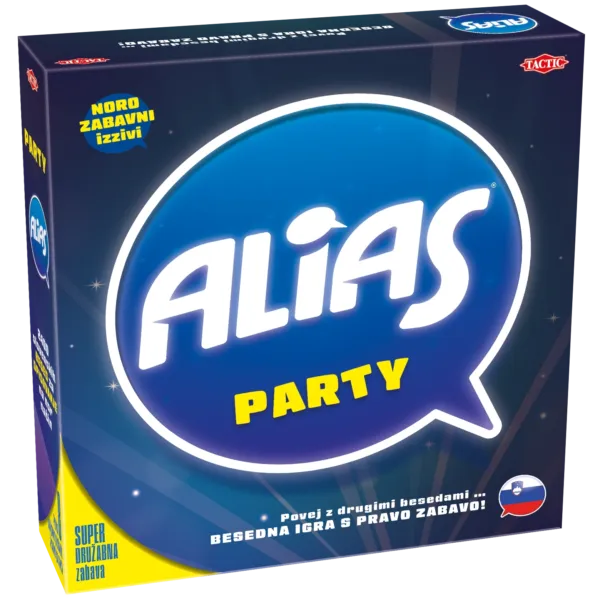
- Players: 4 - 24
- Age: 15+
- Duration: 45 min
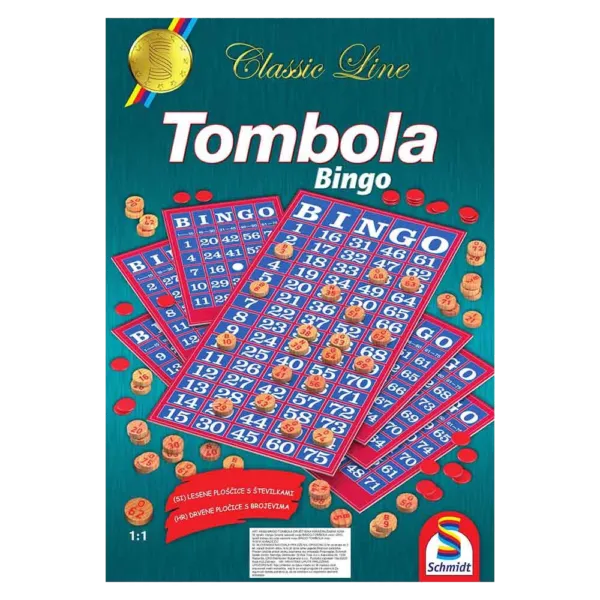
Like Hitster, Tombola has one player who runs the game while everyone else checks their cards at the same time. It is even simpler and also suitable for younger players.
- Players: 2 - 20
- Age: 8+
- Duration: 20 min
Frequently asked questions about Hitster
Sources
- Hitster – How to play: Original (official rules, English) – Jumbo
- Hitster – Kako igrati: Original (official rules, Slovenian) – Jumbo
- Hitster (distributor's page) – Menart Toys
- Hitster (2022) – BoardGameGeek

