


Description
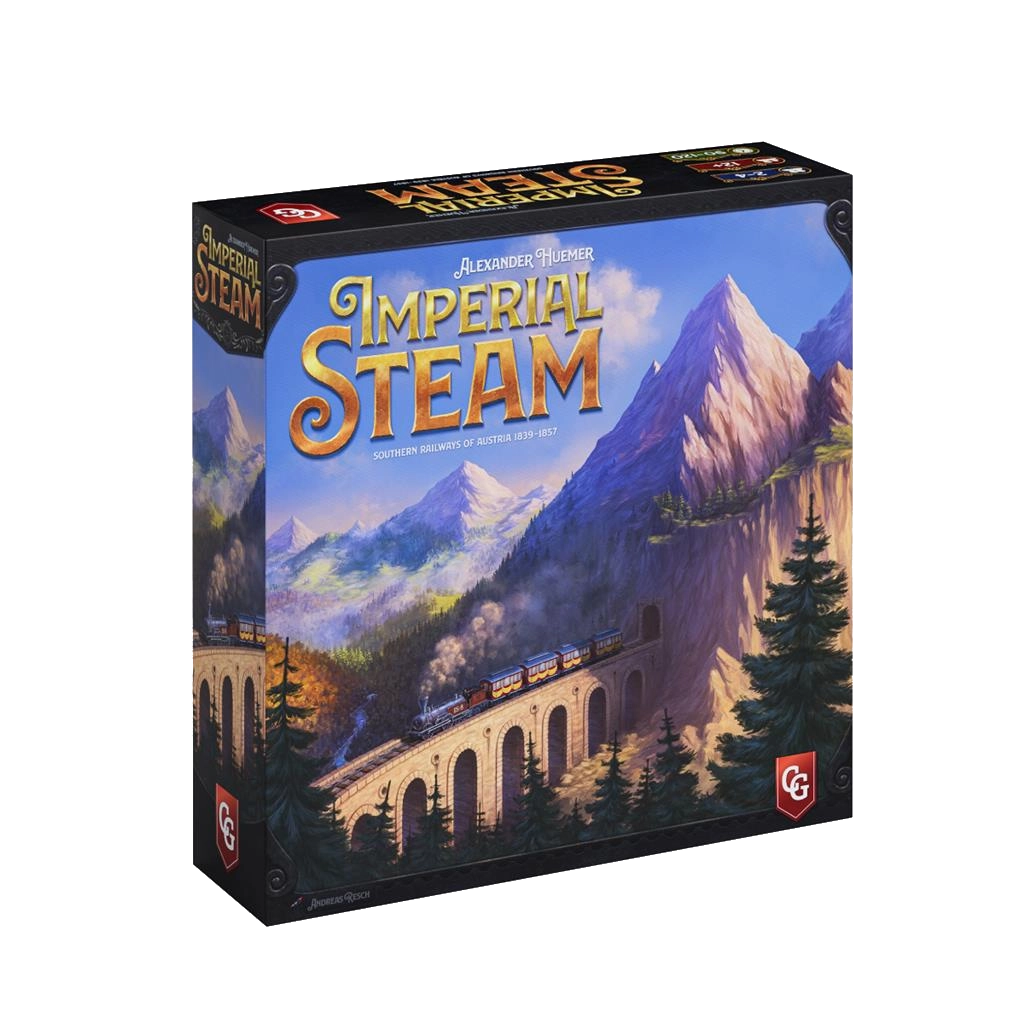
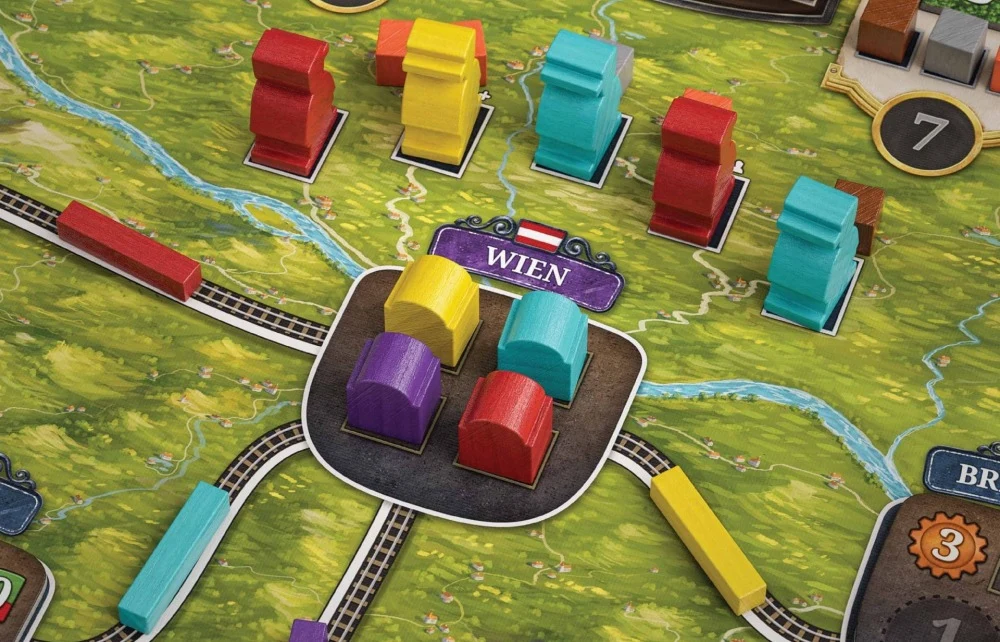
The industrial age is sweeping across the Austrian Empire, and each of you runs your own railroad company. In Imperial Steam, you build tracks south from Vienna, through Graz, Maribor, Celje and Ljubljana, all the way to Trieste. Along the tracks you set up factories for wood, stone, iron and coal, buy locomotives and wagons, and deliver goods to the cities that need them. Florins are everything here: you build with them and pay your workers with them, and in the end they also decide the winner.
How to play Imperial Steam
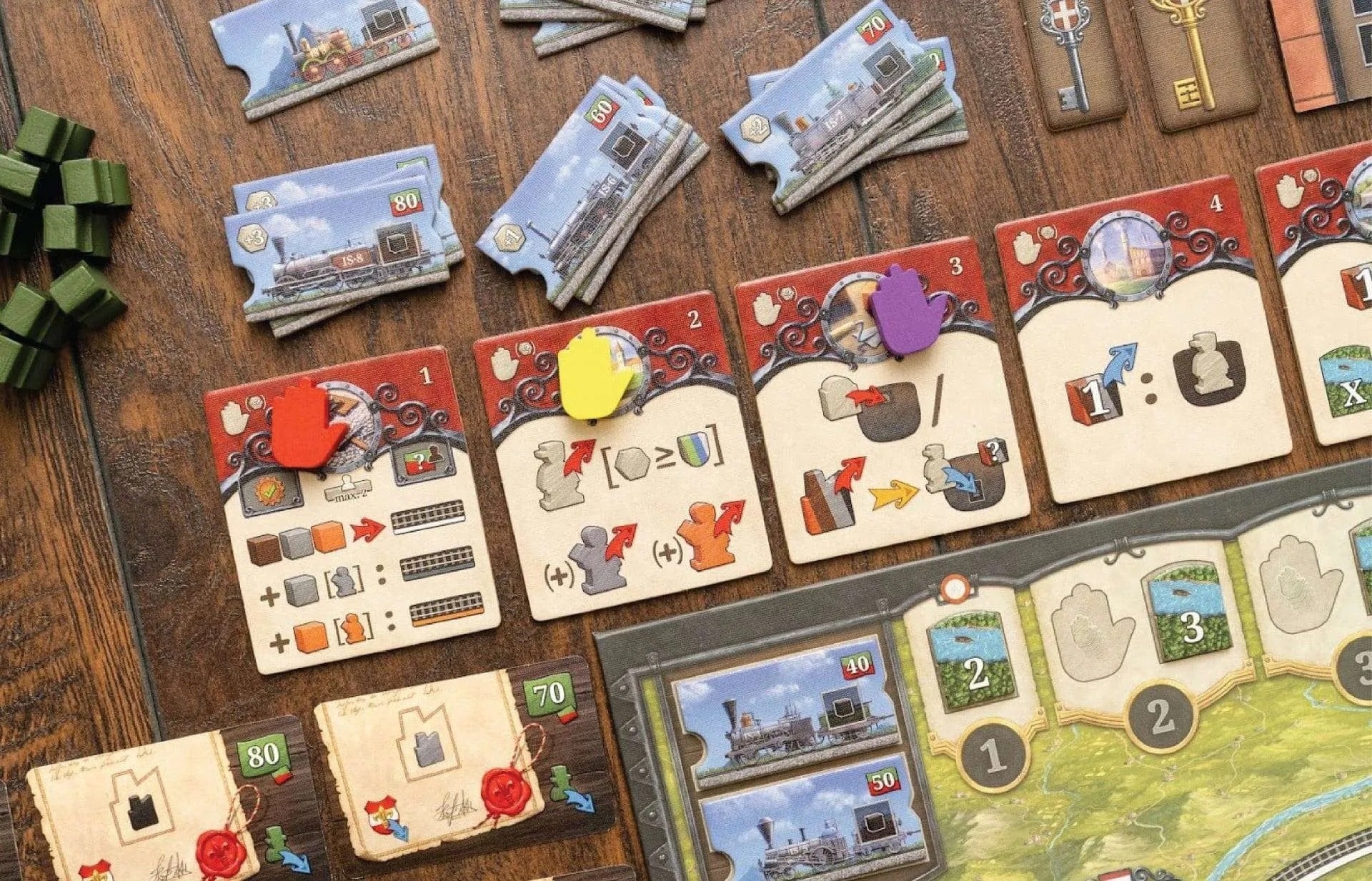
The game lasts up to eight rounds. At the start, everyone secretly bids florins for influence, which sets the turn order. Each round, you take turns placing wooden hands on action tiles: you build tracks, hire workers, build stations and factories, produce or order goods, buy trains and sign contracts. At first you have only two actions per round, and from the fourth round on you have five. If you use the same action again in a round, you lose influence.
To build tracks, you need wood, stone and iron, plus workers with enough experience. The game ends after the eighth round or as soon as someone connects Vienna to Trieste. That is also when contracts count: a fulfilled contract earns you florins, while an unfulfilled one costs you. The player with the most money wins, after subtracting one tenth for each of their shareholders.
Why you will like it
- A worker who rests for a round gains experience, so you plan your track building several rounds ahead.
- Only the connection to Trieste gives contracts their value, but it also ends the game, so think carefully about when to build it.
- Selling shares brings you quick money, but each shareholder takes one tenth of your fortune at the end.
- The first player to build a track across the Semmering mountain pass gets a token that doubles their income at the end.
Who is Imperial Steam for
Imperial Steam is a demanding strategy game for two to four players aged 12 and up, and a game takes about two hours. Players like it best with four. It suits players who enjoy doing the math and planning several moves ahead. For your first game, the rules suggest a fixed setup; after that, the cities and opportunities on the map are arranged differently each time. The cards and tiles use symbols, so the only text you need to read is the English rulebook.
What you might not like
The game is long and involves a lot of calculation, so it may not be the best fit for those who prefer quicker games with fewer rules.
What's in the box
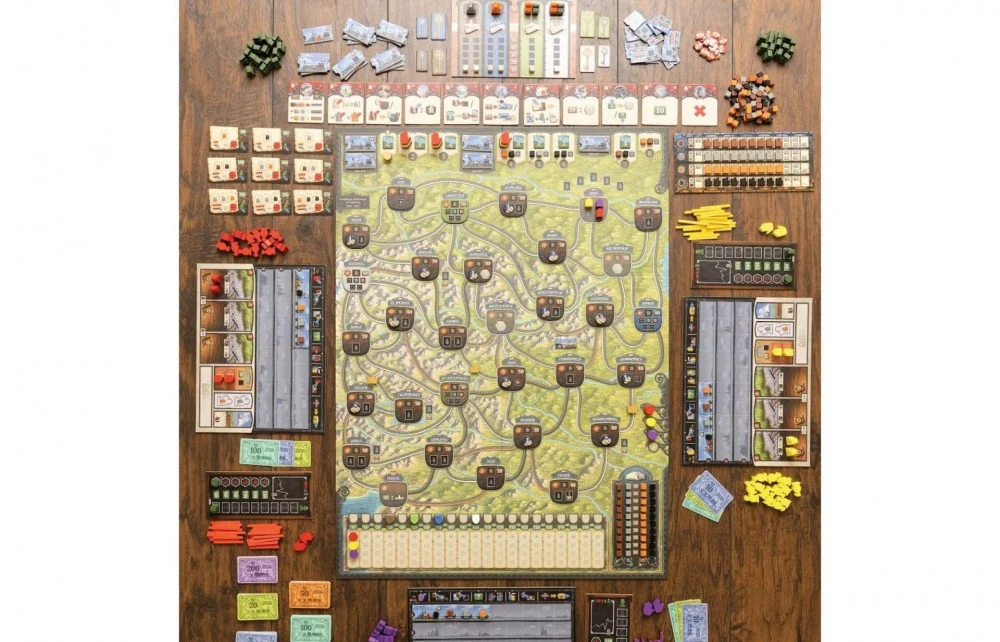
- game board
- 2 factory boards and 2 worker boards
- 4 share boards
- 87 florin cards
- 82 cards: 35 state railroad setup cards, 28 contract cards, 15 standard setup cards and 4 summary cards
- 11 action tiles
- 70 double-sided wagon tiles
- 24 locomotive tiles
- 69 city tiles and 4 large city tiles
- 9 shipment tiles, 8 unbuilt station tiles and 4 growth tiles
- 68 tokens: 35 reservation tokens, 24 business tokens, 8 city key tokens and the Semmering token
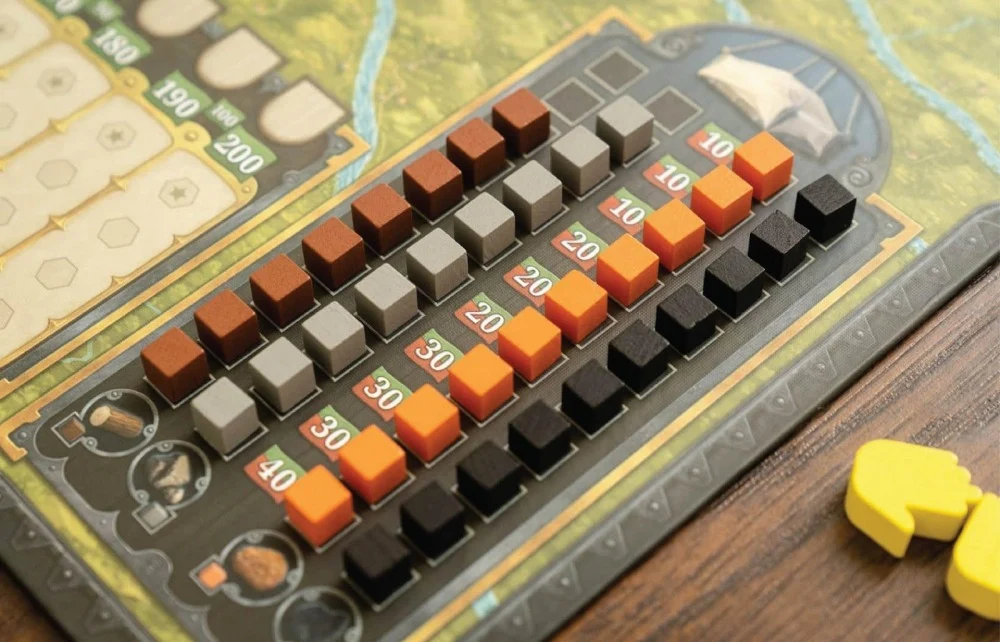
- 160 wooden goods cubes: wood, stone, iron and coal
- 48 wooden factories
- 34 wooden investors, 4 tunnel engineers and 4 bridge engineers
- 21 wooden markers: 8 for worker prices, 4 for large city influence, 4 for share value, 4 state railroad crowns and 1 round marker
- for each of the 4 players: player board, 5 wooden hands, 15 workers, 18 tracks, 3 stations, turn order marker and influence marker
- rules