
Action Points
On each turn, you have a few points that you divide among actions as you choose, such as moving, building, or attacking. Since there are never enough points for everything, every turn is a small puzzle.


How do action points work?
With action points, you get a set number of points on your turn and spend them on the actions of your choice. Moving, building, gathering resources, or fighting can each be a separate action, and you are often allowed to take the same action more than once. Some actions cost more than others, so you have to work out what is worth it. Unused points usually expire, and you can't save them for your next turn. The number of points can stay the same throughout the game, or in some games you increase it by developing your abilities.
Who are action point games for?
Action points will appeal to you if you like planning and looking for a clever order of moves. You can do very different things with the same points, so every turn has several good solutions. The mechanic is common in strategy games for more experienced players, but you will also find it in lighter family and cooperative games. The game moves faster if you plan your turn while the other players are taking theirs. You can play action point games with one other person or in a larger group, and some even on your own.
Frequently asked questions
What do action points mean in a game?
It means that on your turn you spend a limited number of points, choosing the actions yourself, and you can also repeat them. One action may cost one point, another more.
Are action point games suitable for beginners?
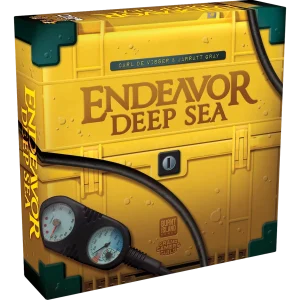
Some are. Takenoko, Pandemic and Project L, in which you have just two to four actions per turn, are for ages 8 and up. Endeavor Deep Sea is for ages 10 and up.
Which action point games are for two players?
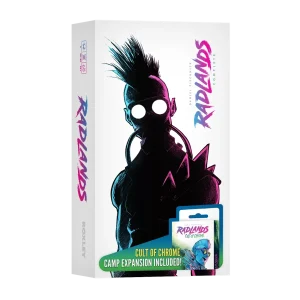
Radlands Complete, which takes 20 to 40 minutes, and The Hunt, which takes 20 to 45 minutes, are for two players only.
How much interaction do action points bring?
It depends on the game. In Hansa Teutonica: Big Box, your actions often block the way for other players, while in other games everyone builds more for themselves.
How are action points different from worker placement?
In worker placement, you claim an action with a playing piece and block it for others. With action points, actions are usually not blocked; the only limit is the number of points you have.