


Description
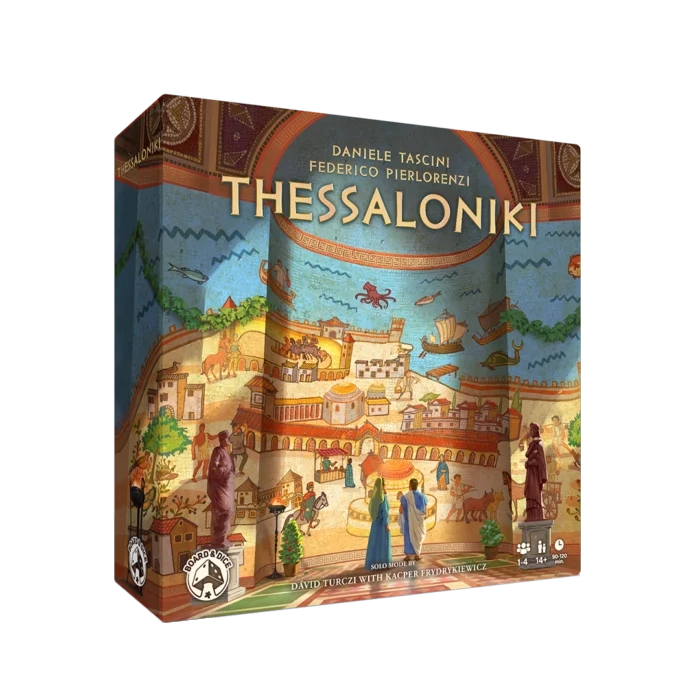
The Roman Empire in the 4th century. Ships laden with grain, oil, grapes and meat rock gently in the harbour of a Greek trading city, while merchants from every corner of the empire jostle in the market. You are one of the patricians seeking wealth and influence. In Thessaloniki, you send your people around the city, gather and process goods, fulfil contracts and load ships that set sail for allied cities.
How to play Thessaloniki
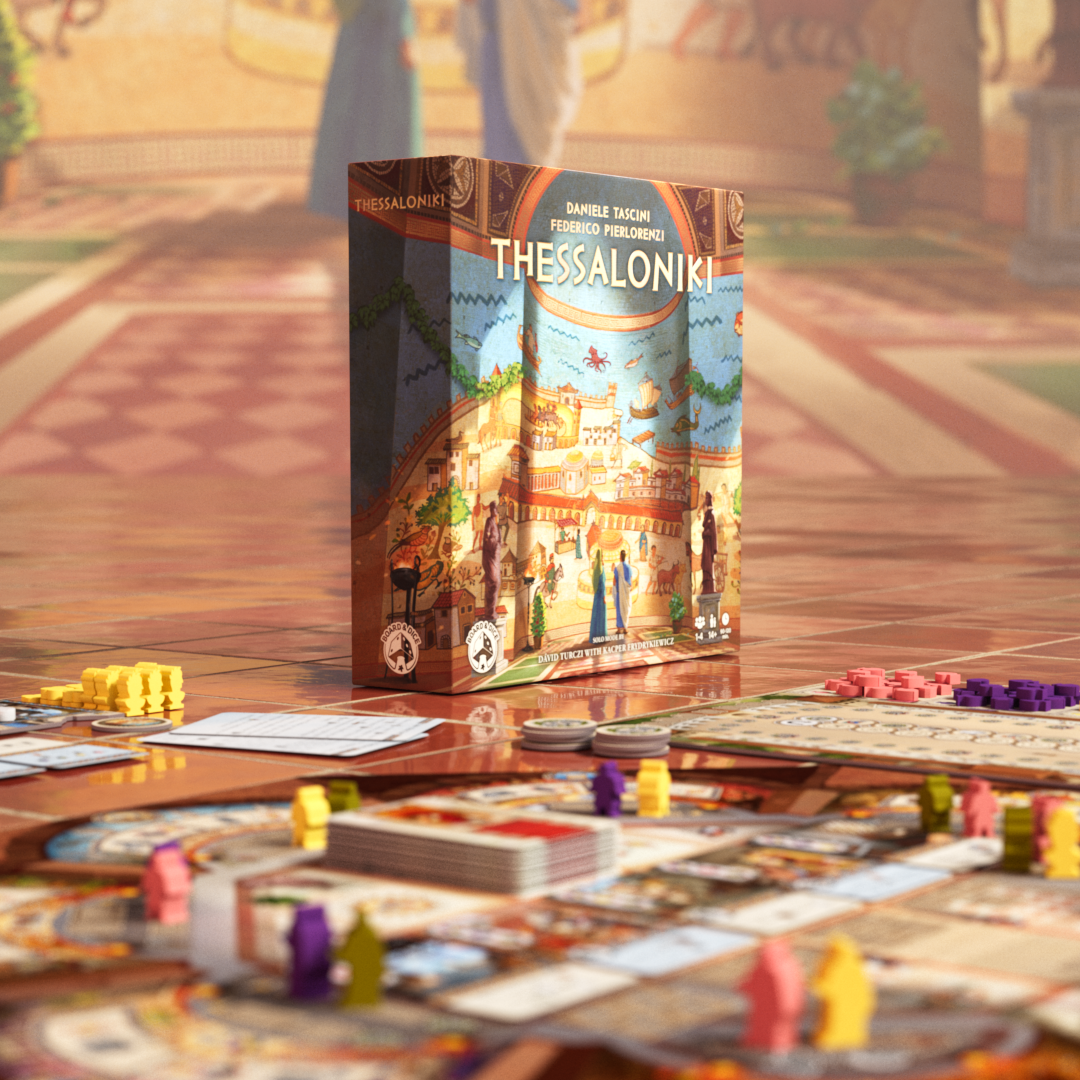
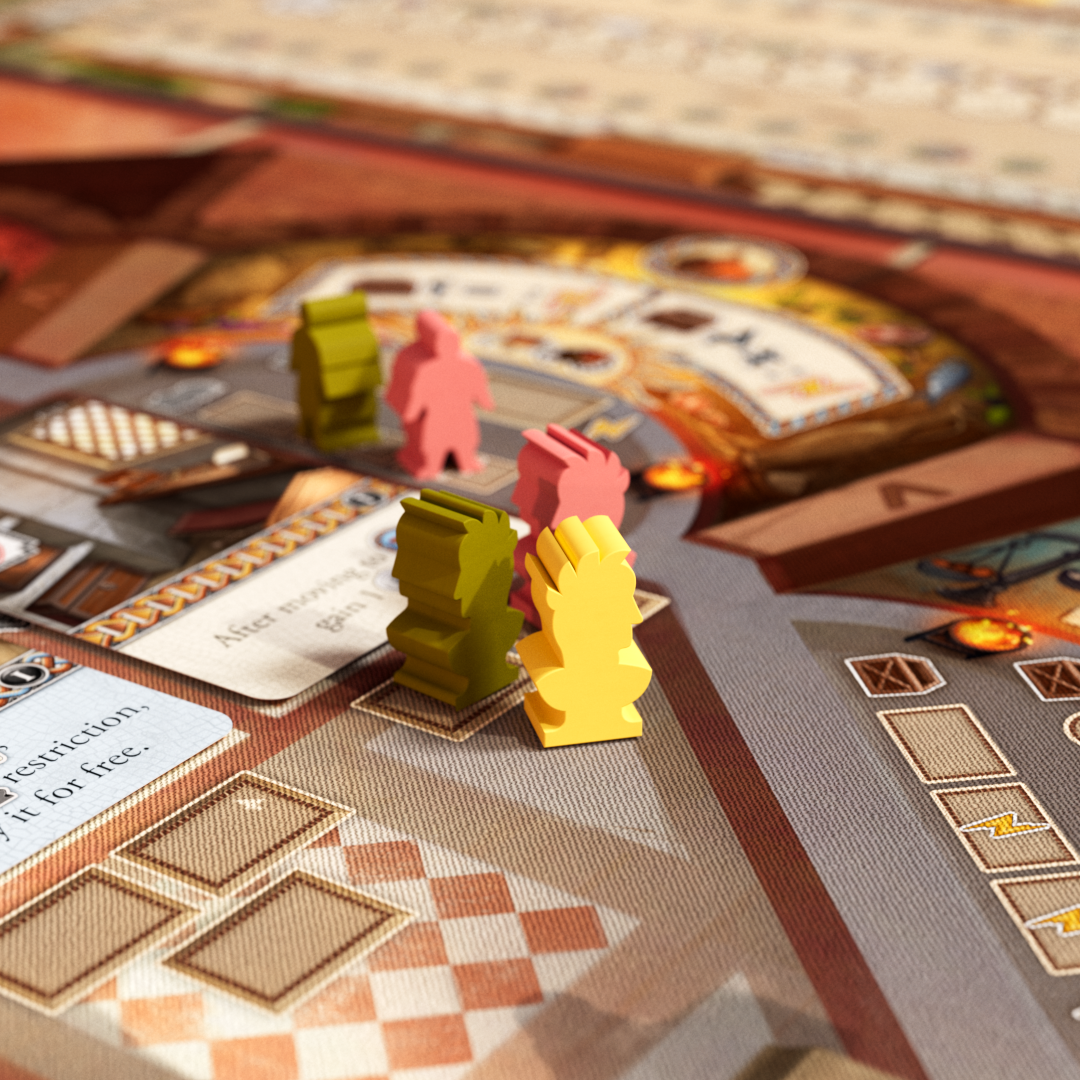
Seven city locations, from the Forum to the harbour, are arranged in a circle on the main board. On your turn, you move one of your workers (your patrician or one of your two merchants) one or two locations forward, or three if you pay a denarius. For each worker in the location you arrive at, you take one good in that worker's colour. You then spend action points on that location's actions: placing mosaics and statues, turning grapes into wine and grain into flour, fulfilling contracts or selling goods to ships. You end your turn with a sunset effect.
The ships in the harbour move forward. When a ship leaves the display, it goes to the player with the most of their own goods on it. The end of the game is triggered when two of four conditions are met, for example when the denarii on the board run out or the seventh demand tile comes into play. You then play one more round. At the end, you score points for ships backed by your statues and mosaics on the demand tiles, for sets of symbols on your contracts, for statues next to the contract display and for the mosaics on your player board. The player with the most points wins.
Why you'll love it
- Every move is a decision: a crowded location gives you more goods, an empty one more action points.
- When someone uses the harbour, you can sell goods to the ships too, so you stay involved during other players' turns.
- At tax time, you lose every raw material not protected by a mosaic, so you plan your storage carefully in advance.
- In the chariot race, you reveal new demand tiles and decide for yourself which ships will be worth the most at the end.
Who is Thessaloniki for
Thessaloniki is for one to four players aged 14 and up, and a game takes 90 to 120 minutes. It is a medium-weight strategy game for those who like to plan several moves ahead. Players enjoy it most solo or with four. The solo mode has its own rules. There is no text on the components, and the rules are in English.
What you might not like
There are a lot of rules, symbols and ways to score, so it may not suit those who prefer quick, simple games.
What's in the box
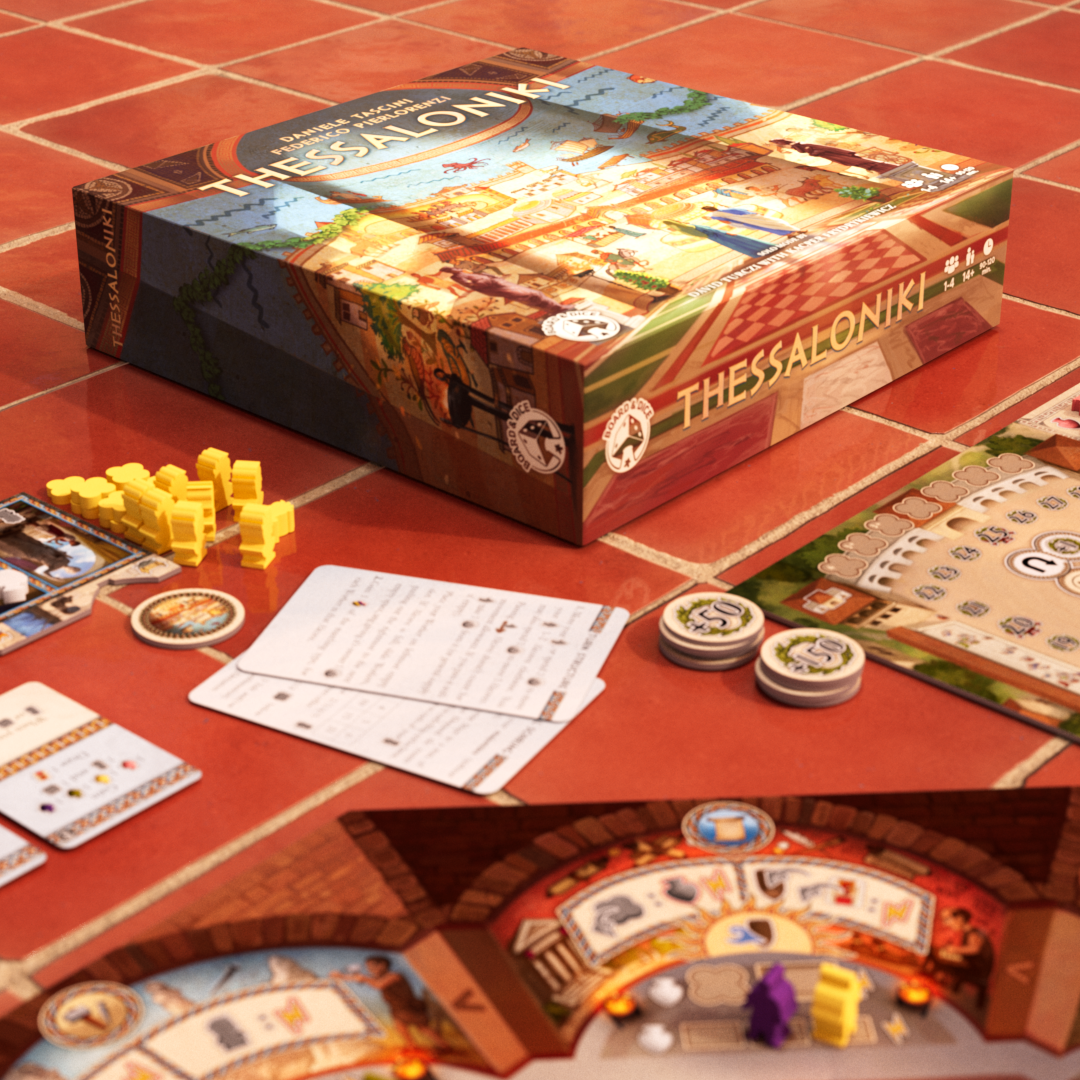
- main board, side board and two-part harbour board
- 4 player boards
- 60 contract cards (30 level I and 30 level II) and a festival contract card
- 8 family cards
- 24 ship tiles and a festival ship
- 12 demand tiles
- 125 goods (25 each of grain, meat, olives, grapes and salt)
- 52 denarii
- in each player colour: a patrician, 2 merchants, a score marker, a chariot marker, 10 mosaics and 10 statues
- salt merchant worker, first player marker, 8 bonus point tokens and 2 festival reminders
- 8 player aid and setup cards