


Description
A line of white tiles slowly winds its way across the table, each tile split into two halves marked with spots. In the classic game of dominoes, you add your tiles to the ends of the line so that matching numbers of spots always touch. The first player to get rid of all their tiles wins, but your opponents can quickly block the ends of the line.
How to play dominoes
Turn the tiles face down and shuffle them. With two players, each player takes seven tiles; with three or four, each takes five. The remaining tiles form the draw pile. The player with the highest double, a tile with the same number of spots on both halves, goes first.
On your turn, place one tile at either end of the line so that the number of spots matches. Doubles are placed crosswise. At the end of your turn, you draw a new tile from the pile, even if you didn't place one. When someone places their last tile, they call out 'Domino!' and the round ends. It also ends when nobody can place a tile. The winner scores points for all the spots left in the opponents' hands. You play several rounds or up to an agreed number of points.
Why you'll like it
- You can explain the basic game in a minute, so children, parents and grandparents can all play together.
- Every tile you place changes the end of the line, so a clever choice can block your opponent.
- The same tiles let you play many variants, such as All Fives, where you score when the spots on both ends of the line add up to a multiple of five.
- With four players, you can play in pairs and score points together with your partner.
Who is dominoes for?
Dominoes is for two to four players aged five and up, and a game takes about 30 minutes. It plays best with four. The rules are easy, which makes it a good fit for family evenings and for anyone new to board games. The tiles have no text, only spots.
What you might not like
Which tiles you get is down to luck, so the game may not suit players who prefer games with more planning.
What's in the box
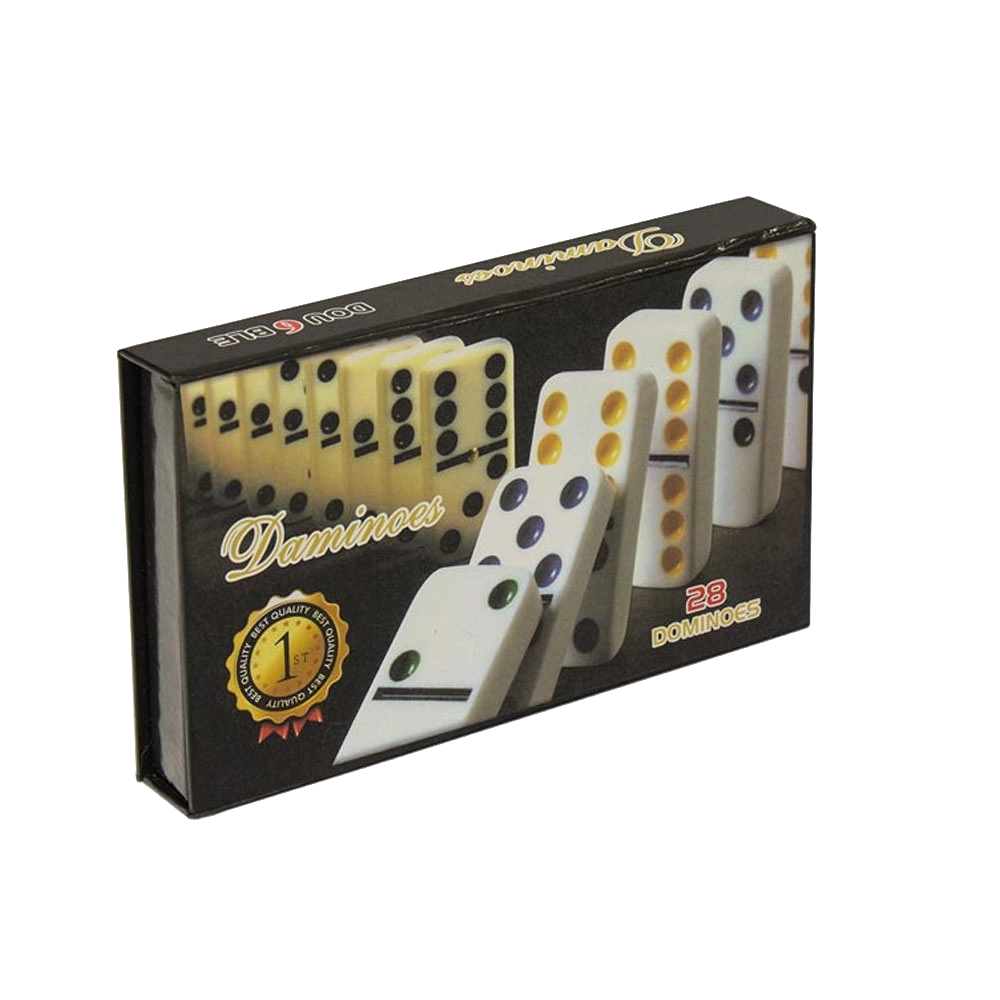
- 28 domino tiles with coloured spots (a double-six set, from 0-0 to 6-6)