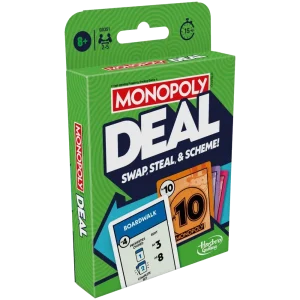
Buy streets, collect colour groups and build houses and hotels on them while your opponents pay you rent. Monopoly is a classic property trading game in which every deal and every auction decides who will end up out of money.
Monopoly is a classic property trading game that families have been playing since 1935. You move your token around the board, buy streets, railway stations and utilities, and build houses and hotels on them. The more developed your property, the more rent your opponents pay when they land on it.
How to play Monopoly
Each player receives 1500 in banknotes. On your turn you roll both dice, move that many spaces and do what the space says. You can buy a property that has no owner, or the banker auctions it off to all players. On someone else's property you pay rent, and on other spaces you draw a card, pay tax or go to jail. Each time you pass GO, you collect 200.
Once you own all the streets of one colour, the rent doubles and you can start building. Anyone who can't pay goes bankrupt and is out of the game. The last player left with money wins.
Why you will like it
You can buy, sell and trade properties with other players at any time – the price is up for negotiation.
In auctions, everyone can bid for a street nobody bought, regardless of turn order.
Once you complete a colour group and put up hotels, the game can turn in your favour in an instant.
The game is known all over the world, so almost everyone knows how to play it.
Who is Monopoly for
For two to eight players aged 8 and up, a game lasts from 60 to 180 minutes. The rules are simple, and players like it best with four. It is suitable for family evenings and for anyone who enjoys dealing and negotiating.
What you might not like
Dice and cards have a strong influence on the outcome, a game can drag on quite a bit, and players who go bankrupt are out before the end. The game may therefore not be the best fit for those who prefer shorter games with less luck.
Monopoly: Everything you need to know about the classic game for the whole family
Do you know that feeling? The excitement of opening the box, choosing your favourite piece and rolling the dice… which, all too often, turns into endless arguments about the rules and threats to overturn the game board after a few hours. Yes, we’re talking about the game that’s both synonymous with cosy evenings in and a source of legendary family squabbles. But don’t worry, you’re not the only one! Many of us have always played Monopoly by ‘house rules’, which have unnecessarily prolonged and complicated the game.
It’s time to change that and restore the game to its former glory! In this comprehensive guide, we’ll reveal everything you need to know about this timeless classic. Together, we’ll clarify the official rules (you’ll be surprised at how much they speed up the game!), share simple yet effective strategies for winning, and help you choose the right version for your group. Once you’ve finished reading, you’ll be ready to take charge of your next games night with confidence and show everyone just how fun and exciting Monopoly can be when played properly.
What is Monopoly and why has it become a global phenomenon?
Few board games have achieved such cult status as Monopoly. For almost a century, this classic property trading game has been bringing families and friends together around a table full of excitement, negotiations and entertaining twists. The aim is simple, yet incredibly appealing: by buying, selling and developing properties, become the richest player and drive all your opponents into bankruptcy.
Its formula, which combines luck of the dice with strategic decision-making, is what keeps the game fresh and exciting even after countless games have been played. Monopoly is not just a game; it is a phenomenon that has spanned generations and adapted to modern times without losing any of its original charm.
The history of the game: More than just rolling the dice
Many people are unaware that the game’s history stretches back further than the name of Charles Darrow, whom we often associate with its success. The game’s origins date back to 1903, when Elizabeth Magie created ‘The Landlord’s Game’. Her aim was not merely entertainment, but to educate people about the negative consequences of land monopolies. It was Darrow himself who then popularised the game as we know it today and sold it to Parker Brothers in the 1930s. For a more detailed insight into the complex journey from idea to icon, you can read the article on the history and rules of Monopoly. The game became hugely popular during the Great Depression in the US, as it offered people an escape into a world where, at least at the table, they could become property tycoons.
Game components: What’s in the box?
Every Monopoly box is a veritable treasure trove of components that, together, create an unforgettable experience. Whether you’re opening the classic version or one of the many themed variants, you’ll find the key components for building your empire:
Game board: The heart of the game, featuring iconic squares including railway stations, the prison and tax payment squares.
Game pieces: Classic pieces such as the thimble, iron and wheelbarrow are often replaced in modern versions with new ones, such as a Tyrannosaurus rex, a penguin or a rubber duck.
Money, property cards, houses and hotels: The basic tools for your financial ventures. You use money to buy property cards, on which you then place houses and hotels to increase the rent.
The ‘Chance’ and ‘Community Chest’ cards: These two piles of cards bring unexpected twists – from cash prizes and fines to the famous command ‘Go to Jail!’.
Monopoly rules: How to play, step by step?
Monopoly is more than just a game; it’s a test of strategy, negotiation skills and a touch of luck that has captivated generations. Although the rules may seem complicated at first glance, they’re actually quite simple once you’ve got the hang of them. Interestingly, the original inventor of Monopoly, Lizzie Magie, conceived the game as a warning against the dangers of inequality, yet today we know it primarily as a fun battle for a property empire. Let’s take a look at how to play the game properly.
Preparing for the game
Before you roll the dice, it’s essential to prepare properly. Each player receives a starting capital of €1,500. They choose their token and place it on the ‘START’ square. One of the players takes on the role of the banker. Their tasks are:
Managing the bank’s money, property cards, houses and hotels.
Paying out salaries (€200 when a player passes START).
Collecting taxes and fines.
Selling properties and conducting auctions.
The banker must keep their personal money strictly separate from the bank’s money.
How to play: What do you do when it’s your turn?
When it is your turn, roll both dice and move your token the total number of pips shown. Depending on the square you land on, you can carry out various actions. If a property is unoccupied, you can buy it from the bank. If it is already owned by another player, you must pay them the rent stated on the property card. The ‘Surprise’ and ‘Treasury’ squares require you to take the corresponding card and follow the instructions.
Building an empire and bankruptcy
The aim of Monopoly is to become the richest player and drive your opponents into bankruptcy. You achieve this by collecting properties of the same colour group. Once you own a complete set, you can start building houses and later hotels, which drastically increases the rent. If you land on the ‘Go to Jail’ square, you must go to jail immediately. You can get out of jail by paying a €50 bail, using a ‘Get Out of Jail Free’ card, or by rolling the same number on both dice. If a player cannot pay a debt to the bank or another player, they go bankrupt and are eliminated from the game. The last player remaining in the game wins!
Winning strategies: How to become a Monopoly master?
Many people think that Monopoly is simply a game of rolling the dice and hoping for the best. But true enthusiasts know that victory lies in a well-thought-out strategy. It’s not just about luck, but about making smart decisions at the right moment. Whether you’re a beginner or an experienced property tycoon, the following tips will help you refine your tactics and boost your chances of winning. Get ready to become a true Monopoly master through smart purchases and skilful negotiations!
Which properties are best to buy?
Not all streets are created equal! Statistical analyses that examine winning strategies in Monopoly in more detail show that the orange and red streets are the most profitable. Due to their proximity to the prison – the most frequently visited square – players land on them more often than elsewhere. Railway stations are an excellent source of steady income, especially if you own all four. It’s best to avoid the most expensive blue streets at the start; buying and building houses (each costing €200) requires too much capital, which is better invested elsewhere.
The art of negotiation and trading
There is no Monopoly without trading, and no victory without Monopoly. Trading with fellow players is crucial for collecting colour sets. A good deal is one that benefits both parties, but gives you a greater advantage in the long run. Try to acquire the last street for an orange set, even if you have to offer two less important properties in return. When negotiating, emphasise how the swap will benefit your opponent – perhaps it will bring them immediate cash or help them complete their own, albeit less profitable, set.
Money management and building
Money is king, but houses bring victory. Follow the ‘rule of three houses’: rent increases most significantly when you build your third house, so aim to build three houses on every street in a set before building a fourth house or a hotel. Never spend all your money. Always keep a cash reserve (at least €200–300) to pay rent or cover unexpected costs. If you need liquidity to build on more profitable streets, do not hesitate to take out a mortgage on less important properties, such as utility companies or individual streets without a set.
The most popular versions of Monopoly
When we think of Monopoly, most of us picture the classic board with properties and railway stations. But the world of this game is much bigger! There are hundreds of versions, ranging from those for the very youngest to collector’s editions for the most avid fans. To make your choice easier, we’ve put together an overview of the most popular versions, so you’re sure to find the right one for you and your group.
This is the game that started it all. The classic edition, with its iconic figures such as the top hat and the car, and its famous properties, remains at the heart of the brand. It’s aimed primarily at families and new players who want to learn the basics of buying, selling and negotiating. Its enduring popularity lies in its simple yet addictive gameplay, which creates moments of excitement and unforgettable memories time and time again.
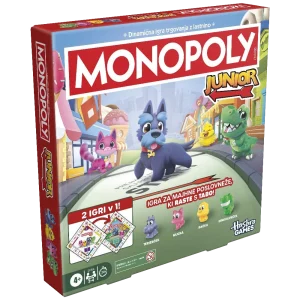
Monopoly Junior: First steps into the world of property
How can you get the youngest children excited about economics? With Monopoly Junior! This version features simplified rules, shorter playing times and child-friendly themes such as sweet shops and toy shops. Instead of houses and hotels, children place ‘Sold’ signs. With its cute characters and focus on counting money, this is a brilliant introduction to the world of board games for children aged 5 and over.
Do you want to become a true Pokémon Master? In this version, you don’t buy property – instead, you set off on an unforgettable hunt! As a Trainer, you explore the land, collect Poké Balls and expand your collection of wild Pokémon. Forget about traditional money – here, it’s all about your hunting skills and victories in battles against rivals. Be the first to assemble your team and prove that you’re the best trainer of all time!
Join the most mischievous little alien in the galaxy! Monopoly Stitch takes you to sunny Hawaii, where instead of properties, you collect Stitch’s favourite memories and adventures. The game celebrates the importance of family (Ohana), but don’t be fooled – the competition for ‘strokes’ and ‘relatives’ is fiercely intense. With charming Stitch figurines in various poses, this edition is the perfect blend of warmth and classic Monopoly strategic planning.
Receive your letter from Hogwarts and step into the world of magic! In this edition, it’s not just about money, but about the honour of your favourite house – will Gryffindor or Slytherin emerge victorious? Instead of classic streets, you buy iconic locations around the school, and points are delivered by owl post. With luxurious gold figurines and magical twists, you’ll forget the Muggle world and immerse yourself completely in the battle for the House Cup. Let the magic begin!
Whether you’re a strategist, a collector or looking for fun for the whole family, there’s definitely the right board for you in the world of Monopoly. Find your favourite Monopoly game in our collection!
Your journey to Monopoly mastery begins here
Now that you know the history, have refreshed your knowledge of the rules and discovered winning strategies, you’re ready to rule the board. Monopoly isn’t just about rolling the dice and buying property; it’s a test of negotiation skills, strategic thinking and, sometimes, a touch of luck. Whether you’re a fan of the classic version or tempted by one of the many themed variants, this game promises unforgettable moments full of laughter and friendly competition time and time again.
Are you ready to put theory into practice? Explore our range of Monopoly games in theBoard Games section and find the perfect one for you!A wide selection of different Monopoly editions awaits you in our online shop, and we’ll deliver them straight to your door with fast delivery throughout Slovenia.
Gather your family and friends, roll the dice and let the building of your property empire begin!
Frequently asked questions about Monopoly
How long does an average game of Monopoly last?
An average game of Monopoly can last surprisingly long. The official rules suggest a playing time of 60 to 90 minutes, but we all know that some games can drag on for several hours. The length depends on the number of players, their strategies and any ‘house rules’. If you want to shorten the game, you can agree on a time limit or play until the first player goes bankrupt. That way, the fun will stay at its peak!
What happens if the bank runs out of money?
If the bank runs out of money, it doesn’t mean the game is over! The official rules allow the banker to issue additional money by writing the amounts down on a piece of paper. Things are different when it comes to properties. If the Bank runs out of houses, players cannot build new ones until one of their fellow players sells their houses back to the Bank or upgrades them to hotels. Patience is sometimes the key to victory!
Can you collect rent whilst you’re in jail?
Of course! Jail in Monopoly isn’t as strict as it seems. Even though you’re ‘behind bars’, you can still collect rent from players who land on your properties. You can also buy and sell properties, build houses and take part in auctions. The only restriction is that your token doesn’t move around the board until you’re released from prison. Business must go on!
What does ‘house rule’ mean, and what are the most common ones?
‘House rules’ are unofficial rules that players agree on before the game begins to spice things up. One of the most popular is that all money from taxes and fines is collected in the centre of the board. The player who lands on the ‘Free Parking’ square collects the entire amount. Another common rule is that a player receives double the payout (€400) if they land exactly on the ‘Start’ square. Give them a go and find your favourites!
How many players is classic Monopoly suitable for?
Classic Monopoly is designed for 2 to 8 players, but the experience is best with a specific number. A two-player game is a fast-paced and tense strategic duel. It’s most enjoyable and balanced with 4 to 6 players, as there’s plenty of interaction and the properties are snapped up quickly. With 7 or 8 players, however, the game can drag on quite a bit and become chaotic, so make sure you set aside plenty of time and have some snacks to hand!
Is Monopoly a suitable game for children?
The standard version of Monopoly is recommended for children aged 8 and over. This is because the game requires basic money management, reading and some strategic thinking. For younger enthusiasts, however, there are excellent versions such as Monopoly Junior. These feature simplified rules, smaller amounts of money and child-friendly themes, making them a great introduction to the world of property tycoons.