
Do you ever find yourself standing in front of a shelf full of colourful boxes, not knowing where to start? Are you worried you’ll choose a game that’s too complicated and your friends won’t like it, or that board games are just for children? You’re not alone. With hundreds of new titles flooding the market, choosing one can be a real challenge, but the world hidden behind these boxes is well worth exploring. Modern board games are, in fact, much more than just rolling dice; they’re a gateway to a world of strategy, cooperation and, above all, unforgettable screen-free socialising.
That’s exactly why we’ve put together this ultimate guide! Together, we’ll demystify the jargon, introduce you to different types of games and help you confidently choose the perfect one to become the star of your evenings. Forget about feeling unsure when buying a game and get ready for a fresh dose of fun, laughter and quality time with your loved ones. It’s time to rekindle the joy of playing!
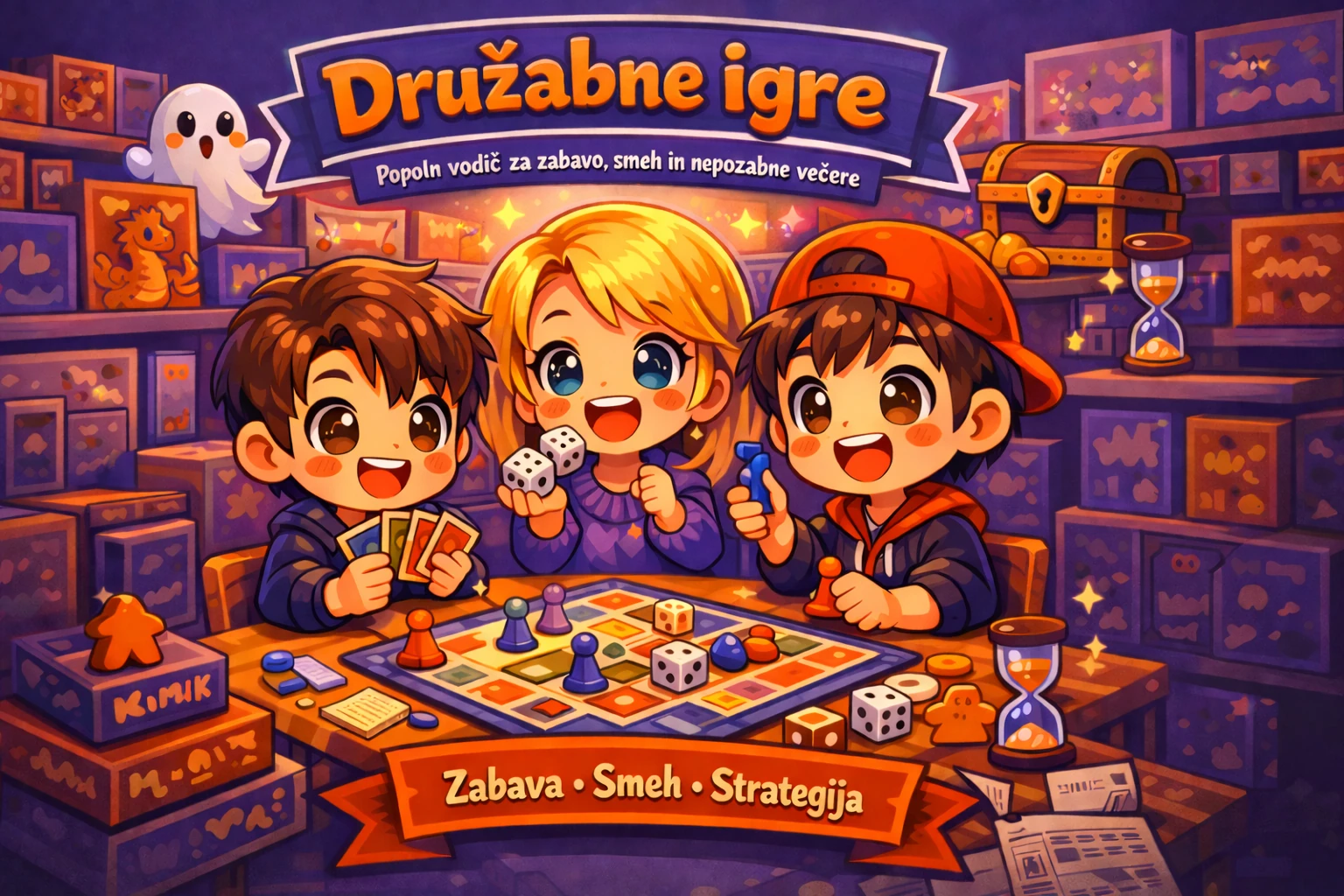
Why are board games more than just rolling dice?
In a world where digital screens often capture our attention, genuine connection with friends and family seems more precious than ever. This is where board games come in – not simply as a way to pass the time, but as a powerful tool for connecting, laughing and creating unforgettable memories. Forget the outdated notion that every game is just a variation on Ludo. The modern world of board games is incredibly rich, full of deep narratives, thoughtful strategies and stunning design, just waiting to be discovered.
Benefits for the mind and spirit
Playing games isn’t just fun; it’s also incredibly beneficial for our brains and well-being. For a few hours, it takes our minds off our everyday worries and offers numerous benefits:
- Fostering creativity and problem-solving: Every game is a new challenge that requires us to find innovative solutions and adapt our strategy.
- Teaching healthy competition and cooperation: Games teach us how to win and lose with dignity, whilst cooperative games strengthen team spirit.
- Reducing stress: Focusing on the rules and the flow of the game is an excellent way to relax and take your mind off stress.
- Maintaining mental vitality: From developing logical thinking in children to keeping the mind sharp in older people – games are a form of mental exercise for all ages.
From Monopoly to modern classics
Many people remember classics such as Monopoly or Risk, but the world of board games has experienced a real renaissance over the last twenty years. Although the history of board games is long and rich, modern games have evolved into in-depth and thematically diverse experiences. Instead of simply rolling the dice, today we have innovative mechanics such as worker placement, deck-building or collaborative puzzle-solving, where all players work as a team. Themes range from exploring space and ruling over fantasy kingdoms to solving detective cases, ensuring that there is something for everyone.
Modern board games are therefore much more than just a piece of cardboard and a few figurines. They are an invitation into a world where imagination knows no bounds, where every game is a new adventure, and where the greatest victory is the time we spend together. They are proof that the best fun is the kind we share.
The world of board games: Explore the most popular genres
The world of board games is incredibly rich and diverse, so choosing the right game can sometimes be a real challenge. But don’t worry! By understanding the basic genres, you’ll quickly find a game that will delight you and your friends. Each category offers a unique experience, so don’t limit yourself to just one type – be bold and explore everything this wonderful hobby has to offer. We’ve put together a brief overview of the most popular genres to make your next purchase easier.
Family and ‘Gateway’ games
These games are the perfect introduction to the world of modern board games. Their main advantage is their simple rules, which can be explained in a matter of minutes, and their shorter playing time. They’re ideal for family gatherings, playing with children or introducing friends who aren’t yet experienced players. The focus is on fun and accessibility, not on complex strategy.
Examples:
Strategy (Euro) games
If you enjoy planning, optimisation and mental challenges, strategy games are the right choice for you. In these games, luck is often of secondary importance, as success depends on your decisions, resource management and long-term strategy. It’s not just about fun; research also confirms numerous cognitive benefits, such as improved logical thinking and problem-solving skills.
Examples:
Thematic games
In themed games, the experience takes centre stage. The focus is on the story, the atmosphere and direct confrontation between players. Get ready for epic battles and moments of tension. If you want to immerse yourself in a fantasy world, battle monsters or save the galaxy, these games are perfect for you.
Examples:
Co-operative games
Who says you have to compete? In cooperative games, all players join forces and play as a team against the game itself. Success depends on good communication, coordination and working together to overcome challenges. These games are excellent for building team spirit and offer a unique sense of triumph when you manage to beat the game together.
Examples:
How to choose the perfect game for your group?
Buying a new game is exciting, but the vast range on offer can also be a bit overwhelming. The most important step towards a perfect evening of fun is knowing your group of players. Don’t buy a game just because it’s popular on social media. Instead, take a moment to answer a few questions honestly. The right answers will guide you towards a game that will delight everyone around the table.
To make your search easier, we’ve put together a list of key factors worth considering. In our online shop, you can use some of these factors as filters to quickly narrow down your selection to the best party games for you.
Key factors to consider
Before adding a game to your basket, consider the following points. Each of them plays an important role in determining whether the game will become a regular feature at your get-togethers or end up gathering dust on the shelf.
- Number of players: Will you be playing as a couple, with the whole family, or at a party with a larger group of friends? Some games are brilliant for couples (e.g. 7 Wonders Duel), whilst others really come into their own in a larger group (e.g. Codenames).
- Playing time: Do you only have 15 minutes for a quick game, or are you planning an epic evening of gaming lasting several hours? The estimated playing time is listed on every box (and on the product page) and is crucial for planning.
- Complexity: Are your fellow players complete beginners or seasoned strategic veterans? Start with simpler, ‘entry-level’ games if you’re just entering the world of board games, and gradually move on to more demanding challenges.
- Age suitability: This is particularly important when playing with children. The recommended age on the box is an excellent guide, as it takes into account the complexity of the rules and the suitability of the theme. Don’t forget that board games have also been shown to offer numerous educational benefits, from encouraging logical thinking to developing social skills.
Theme and mechanics
Once you’ve established the basic requirements, it’s time for the fun part – choosing the theme and how to play. Does your team prefer to immerse themselves in fantasy worlds with dragons and wizards, explore the cosmos in science-fiction adventures, or build empires in historical games? The theme sets the mood and greatly enhances the experience.
The mechanics are just as important. Do you enjoy rolling the dice and leaving it to chance? Perhaps you prefer strategically placing tiles, tactically collecting cards or the thrill of bluffing? Think about what your group enjoys most and choose a game that suits your style. Browse through our categories and find your theme!
Key terms every player should know
Stepping into the world of board games can be a bit confusing at first because of the specific vocabulary. But don’t worry! Knowing a few key terms will make it much easier for you to understand the rules, read reviews and watch video presentations. With this knowledge, you’ll feel more confident when choosing and buying your next favourite game.
Most of the terms are very simple, but knowing them will open the door to a deeper understanding of this wonderful hobby.
Basic components and mechanics
Every game is made up of different parts and operates according to specific rules. These are the foundations found in almost every box and define the gaming experience.
- Mechanics: The heart of every game. These are the rules and systems that determine what players can do and how the game progresses (e.g. rolling dice, drawing cards, placing workers).
- Game board: The central area where most of the action takes place. It can be static (Activity) or modular (Catan), where it is set up differently each time.
- Tokens and Miniatures: Small objects representing everything from resources, money and points to your character in the game. Miniatures are often intricately designed and add visual appeal.
- Dice: The classic generator of randomness, determining movement, the outcome of battles or the collection of resources. However, they are not present in all games!
Types of products in the world of games
As you browse the shelves or our website, you’ll notice that games aren’t just standalone boxes. Understanding these categories will help you realise exactly what you’re buying and what you need to play.
- Base Game: This is a standalone product containing everything needed to play. Without it, expansions are pointless.
- Expansion: An add-on that adds new mechanics, components, characters or scenarios to the base game. It requires the base game to play.
- Standalone Expansion: A special type of expansion that can be played as a standalone game, whilst also being combined with the base game for an even richer experience.
- Accessories: Anything else that enhances the gaming experience but isn’t essential for playing: card sleeves, special dice, playmats, dice towers or box organisers.
Now that you know the basics, you’ll find it much easier to understand what reviewers are talking about and exactly what’s inside the box. This knowledge is your first step towards becoming a true connoisseur and confidently choosing the perfect board games for your collection. Ready? Take a look at our extensive range and put your new knowledge to the test!
Your first collection: Where and how to start?
Stepping into the world of modern board games can seem a bit daunting at first. Hundreds of new titles every year, unfamiliar terms and colourful boxes promising hours and hours of fun. Where on earth do you start? The best advice is simple: take it slowly. You don’t need to buy ten games straight away. Choose one or two that seem best suited to your group, and dive right in.
Not sure which game would be right for you? Don’t be afraid to ask for advice! In specialist shops like ours, we’ll be happy to help you find the perfect game. Before playing for the first time, though, take a moment to watch the online video explaining the rules, which you’ll also find on our website for every game. This will make it much easier and quicker for you to get the fun started.
Recommendations for your first purchases
To make it easier to get started, we’ve put together some tried-and-tested tips on how to choose your first games for your collection:
- Start with a ‘gateway’ game: These are games with simple rules, yet they offer enough depth to captivate even experienced players. Excellent examples include Catan, Ticket to Ride or Carcassonne.
- Cover a range of scenarios: Consider buying one game for larger groups (e.g. the fun game Codenames) and one that’s perfect for two players (e.g. the strategic 7 Wonders Duel).
- Don’t forget the classics: Games such as Activity or Scrabble have stood the test of time for a reason. They’re a reliable choice for a relaxed family evening.
Looking after your games and accessories
Once you’ve invested money and time in your new game, you’ll want it to last as long as possible. Proper care is essential. Card sleeves are a small but extremely sensible investment that protects your cards from wear and tear, spilt drinks and sticky fingers. For more complex games with lots of components, organisers and box inserts are indispensable, drastically reducing the time spent setting up and tidying away.
Store your growing collection in a dry place, away from direct sunlight, to prevent the colours from fading. Storing them upright on a shelf is ideal, as this prevents the boxes from being crushed under the weight of others. For everything you need to protect and organise your precious games, you’ve come to the right place. Stock up on all the necessary accessories in our shop.
The table is ready – are you?
Our journey through this guide is drawing to a close, but your real adventure is only just beginning. We’ve learnt that games are much more than just rolling dice – they’re bridges that connect us, a workout for our brains and a source of priceless memories. Whether you’re drawn to tense strategy games, hilarious party games or cooperative challenges, choosing the perfect game is now easier than ever. The world of board games is limitless and waiting for you to explore it.
Are you ready to roll the dice and start a new chapter of fun? As a team of passionate gamers, we’ve poured our love into an online shop created with ❤️ for board game enthusiasts in Slovenia. We offer a wide selection of games to suit all tastes and ages, and with fast delivery and the option of collection in person, we’ll ensure your new adventure reaches you in the shortest possible time. Don’t delay any longer!
Explore our extensive range and find your next favourite game!
Gather your team, open the box and create memories that will last a lifetime.
Frequently asked questions about board games
What’s the best board game for complete beginners?
There isn’t just one ‘best’ game, as the choice depends on personal taste. However, for beginners, we recommend games with simple rules and fast-paced gameplay. Ticket to Ride or Carcassonne are excellent choices, as they have a clear objective and simple mechanics. For larger groups and relaxed fun, party games such as Codenames or Hues and Cues are ideal, as you can learn them in a matter of minutes.
How can I persuade my friends to give board games a go?
The key is choosing the right game for the right group! Start with a game based on a theme they’re interested in – fantasy, science fiction or detective stories. Co-operative games, such as Pandemic or Exit, where you all play as a team against the game, are a brilliant idea. That way, there’s no competitive pressure. Emphasise that the main aim is to socialise and have fun, not to win. They might be surprised at just how much fun modern games are!
How long does it take to learn the rules of a new game?
The time it takes to learn the rules depends very much on the complexity of the game. You’ll get the hang of simple card games or party games, such as Exploding Kittens, in five to ten minutes. For moderately challenging family games, such as Catan, allow around 15 to 20 minutes. With complex strategy games, however, it can take more than half an hour to learn the rules. Top tip: before you play, have a look at a short video online explaining the rules! For every game, we have a ‘How to Play’ section that links to these videos.
Are more expensive games necessarily better?
Not at all! A higher price (e.g. over €60) usually means more components, detailed miniatures, a large game board or a licence from a well-known brand. However, price is not a measure of how much fun a game is. There are loads of fantastic, award-winning games for under €20 that offer hours and hours of fun. The most important thing is to choose a game that suits your group and playing style, rather than the price on the box. The most popular game at the moment, Flip 7, costs less than €20.
Where can I find Slovenian rules for games originally in English?
On our website, you can easily find games with Slovenian rules using a special filter; furthermore, games in Slovenian are clearly marked, so you can spot them quickly whilst browsing our selection.
For games that do not come with Slovenian instructions, the BoardGameGeek (BGG) website is an excellent resource, where users often post unofficial translations of the rules in various languages. Check the ‘Files’ section on the page for each individual game. We also recommend joining Slovenian Facebook groups, where the community will be happy to help you. Sometimes you can also find Slovenian rules on the website of a local distributor.
What is the difference between a party game and a board game?
The term ‘party game’ is a broader concept that encompasses all games designed for socialising and having fun in a group. This includes card games, dice games and, of course, board games. A “board game”, on the other hand, is a narrower term and refers to those party games that feature a game board as their central element (e.g. Monopoly, Catan). In everyday conversation, however, the two terms are often used interchangeably, and we all know that they’re great fun to play around the table!